Vive l'Anarchie - Semaine 51, 2025

Sommaire

(Italy) È uscito il terzo numero di “disfare – per la lotta contro il mondo-guerra”

Publié le 2025-12-23 08:08:56

The third issue of “disfare – per la lotta contro il mondo-guerra” (undo – for the fight against world war) is now available.

È uscito il terzo numero di “disfare – per la lotta contro il mondo guerra”, dell’autunno 2025.

Per richiedere copie / To request copies / pour demander des exemplaires: disfare@autistici.org

Scarica il pdf dell’editoriale: disfare_3_editoriale

Editorial

Interrupt the flow, rediscover the world

What happened between late September and early October was, in some ways, a perfect storm. The call launched by the dockworkers of Genoa (and taken up in the ports of Ravenna, Livorno, Salerno, Marghera, Trieste, Naples…) to “block everything”, on the occasion of the Sumud Flotilla’s attempt to break the Israeli naval blockade of Gaza, saw millions of people take to the streets with the idea of participating in a concrete effort against the genocide. The ambivalence on board was reflected in the streets – internationalist solidarity versus humanitarianism, direct action versus representation, breaking the law versus constituent proposals, rejection of delegation versus mediatisation, mutual recognition among the exploited versus interclassism – and did not allow any easy or immediate interpretations. These were “spurious”, “opaque” uprisings – as political analysts have been saying since the Forconi, the Trattori, and the No Green Pass protests[1] – whose simultaneity and numbers put the government in a difficult position, while various components of the more or less institutional left attempted to secure a space for political representation[2].

Fog and manipulation, certainly, but in a fracture of normality, a breach has opened up for what until recently would have been unthinkable. Blocking factories, ports, stations, motorways, airports, schools, universities. Taking to the streets without permission and clashing with those who prohibit it. No longer the question “why take to the streets?” but, for many, being in the streets with nothing to ask for, with the yearning for all the horror to end and the feeling that the time for action can no longer be postponed.

Propaganda had accustomed us to thinking of war in Europe as a 20th-century phenomenon, and it’s again from the 20th-century that the myth of the general strike has returned, with all the force – and fault lines[3] – that it brings with it. Hundreds of thousands of people took to the streets across Europe (in France, Spain and Greece), producing, voluntarily or not, irregularities and misalignments which – as in the mass demonstrations that inflamed the “global South” thanks to the no future youngsters (p. 41), those who risk facing the prospect of conscription in the coming years – have opened up the possibility of jamming the machinery of terror, with a combination of action and non-collaboration[4].  The practice of widespread blockades broke the deadly established order by a game of decomposition and correspondence: “blocking to advance”, said a slogan with a taste for oxymoron. Decomposing total war into its specific ramifications – a factory, a road, a port, a government building, a cable, the police – and, by attacking them, recomposing the overall picture of hierarchical and commercial relationships.

After two years of genocide streaming live, and while on the Eastern front the threat of total destruction – which science wants to make technically endless[5] – continues, those moments – some unexpected, such as the attack on Tech Week and Leonardo in Turin (p. 28), others organised and collective, such as blockades (p. 22) and demonstrations at various decisive junctures of war – have sometimes broken the time of representation, of law, of the humanitarian banality of good that does not question the structures of domination and of its ineluctability. And, against the flat sea of resignation, they have made a new-found ethical tension palpable.

Misalignments and disruptions to normality, sometimes within and against the demonstrations themselves, were capable of revealing logistics – a science and technology whose rationality originates in the military sphere (p. 7) – as the central pivot in the organisation of the total war. The organisation of flows, increasingly sophisticated and engineered, in which civilian and military routes overlap seamlessly on a daily basis, presents obvious vulnerabilities and thus becomes a powerful terrain for anti-militarist struggle, as evidenced by the actions of anonymous defeatist saboteurs in many parts of the old continent – against railways, ports and research centres (p. 30, p. 46).

The recent blockades and sabotages of war logistics (whether of goods, human beings or information) take on a much deeper meaning than simply “disarming” production and technology (so that they can continue to expand for the general good) as invoked in the representations of the Left – whose history is tightly linked to war, be it privatisation, peace missions, labour reform, public order or administrative detention (p. 49). It is life itself that comes to be conceived as a flow that can be manipulated and optimised. For this reason, interrupting the flows of war can mean questioning everything: breaking with the conception that life can be reduced to an entity entirely analogous to machines, a conception which is at the core of the attempt to replicate human intelligence through computers – a project that, since its inception, has been aimed at increasing military power (p. 14). The very concept of militarisation, although often used with good intentions, is misleading: it implies a corruption or distortion in the military sense of knowledge, technologies and institutions that is supposed to be only recent and localised. In reality, the techno-world and war – as we explore in this issue particularly with regard to logistics and artificial intelligence – are involved in a historical relationship of co-production through which they have given and continue to give shape to each other and share the same underlying logic.

Meanwhile, the History that the rulers would like to write continues to take shape. Military conflict always seems to be on the brink of erupting (from Poland to Iran), while pre-war mobilisation and authoritarian alliances are strengthening – for example, through the hunt for deserters, who are now being tracked down in Ukraine by the very drones that are replacing them in the trenches (p. 31, p. 33). The BRICS+ countries – which have contributed to manufacturing the machinery of genocide (from Chinese and Indian drones to Brazilian oil, South African and Russian coal, Egyptian, Emirati and Saudi logistics…) – do not represent an “alternative” at all. While the “eternal peace” flaunted by Trump in the Middle East is the same as the one proposed for Ukraine: shaky or non-existent truces, foreshadowing further massacres in that macabre sequence of destruction-depopulation/reconstruction-reorganisation that reveals the continuity between the genocidal plan and that of ordinary eviction or urban redevelopment. While alliances between states are increasingly taking on variable and inextricable geometries, the US attack on Venezuela confirms an old and well-known adage: America First means first and foremost closing the ranks in its “backyard”.  In fact, in Latin America, behind the rhetoric of the war on drugs (p. 35), neo-colonial domination is consolidated over resources and bodies considered strategic for military-commercial logistics, energy and the dollar (p. 44). Meanwhile, in Europe, the rearmament bubble (p. 11), pushed by both the sovereignist and globalist elites – although with different rhetorical strategies –, is preparing great profits for financial predators.

The decline of Western power reveals its ferocity and makes mass incarceration a reality, already fully visible in Gaza and the West Bank, in the deportations of migrants in the US and Europe, in the raids in the outskirts of urban areas that turn into massacres in the favelas of Rio, and in the banning of “internal enemies” – terrorists, traffickers, and the “bad” kind of poor. Reflecting on the “mutual relationship between forms of incarceration and the characteristics of resistance” (p. 38) is therefore more necessary than ever. At the very moment when, following proscription and over two thousand arrests, the prisoners of Palestine Action are embarking on a hunger strike, the presence of prison police in riot gear during the October 4th demonstration in Rome gives a clear image of the future that awaits that part of humanity considered an enemy or a threat, inside and outside the borders. In this war scenario, whether defined as “high” or “low” intensity, there will be no international rights, constitutions or supranational bodies to defend populations from the abyss. For this task, “we are all we have”.

If humans have long been “without a world”, undoing the war-world – the horror that is simply “given” – means precisely (re)finding the world as intention and meaning for that part of humanity that has been cut off or never admitted to the History of the ruling class. At a time when, through weapons of total destruction, the scenario of a world-without-humans is potentially unfolding, the breaches opened in September and October, intertwined with the unexpected events of October 7th, tell us that it is possible to reactivate the histories of the dominated by interrupting the historical continuum of domination. As the contribution “The tasks of the present hour” (p. 5) points out: “We must break escape what Riccardo d’Este called ‘the totalitarianism of the fragment’ (…). While our privileges differ greatly depending on skin colour, class and gender, all our lives are sustained by the global plundering of resources and bodies, forests and childhoods, community livelihoods, glaciers and cosmovisions. An unexpected notification is coming from the “Global South”: resources and bodies are becoming increasingly scarce, as the Palestinian revolt summons five hundred years of plunder and resistance”.

“There is no certainty about tomorrow”, says the largest prison uprising in history, in Palestine. And as the autumn protests affirm, here as elsewhere, rejecting technologically equipped dispossession and the material and spiritual predation of our lives has perhaps become thinkable.

[1]Uprisings that have emerged in Italy since 2011, TN.

[2]Let us focus here on the CGIL trade union, which first called a strike on 19 September – weakening the strike called by the grassroots unions on 22 September – and then, without fear of contradiction, joined the general strike on October 3rd initially called by the grassroots union SI Cobas, in order not to alienate its own social base.

[3]According to Walter Benjamin’s well-known reflection (On the Critique of Violence, 1920), which, returning to Sorel’s critique, distinguishes between the political general strike – which aims at a change in the balance of power entirely within the sphere of the State and the law – and the proletarian general strike, which raises “the question of a different kind of violence”, revolutionary because its aim is not to seize the state, but to destroy its order and temporality.

[4]Which we discussed in the first issue of disfare, in the article “The Fire of Prometheus”.

[5]The new nuclear-powered missile Burevestnik – “storm bird” – tested by Russia, reactivating global technological and scientific competition, can remain in flight at low altitude for hours thanks to its atomic engine.

https://ilrovescio.info/2025/11/17/disfare3/#_ftnref5

[France] Tags anticarcéraux et antipsychiatrie sur un hôpital psychiatrique

Publié le 2025-12-23 08:18:54

Volé dans la presse, le 16/12/2025, et reçu par mail.

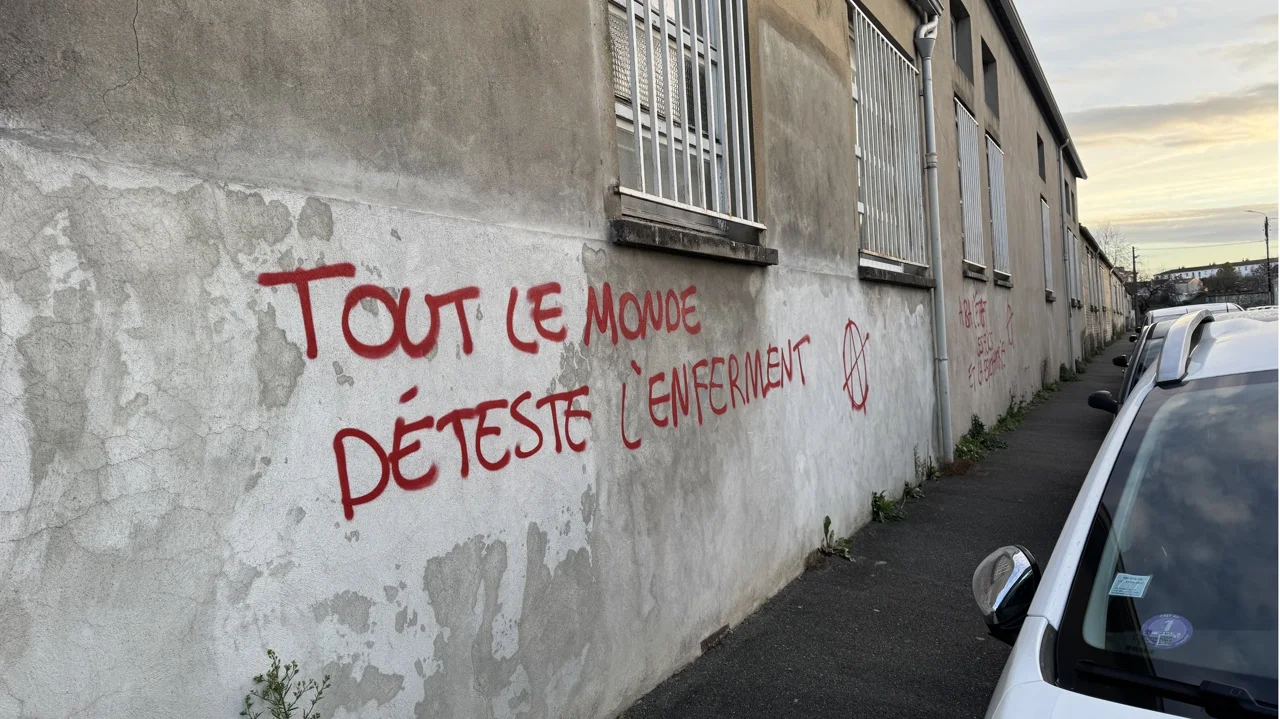
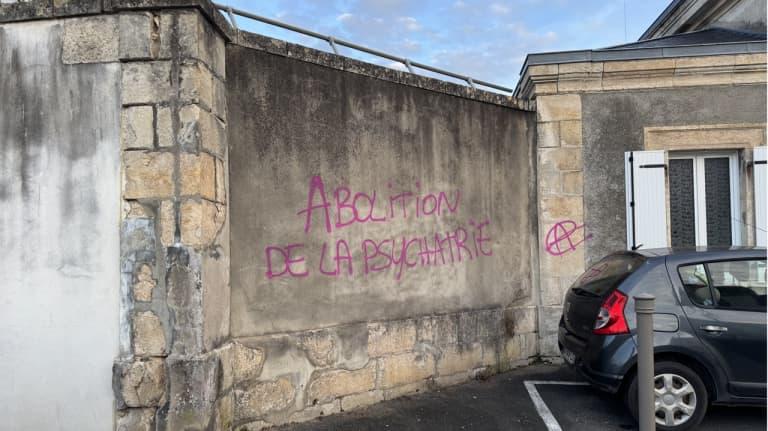
Plusieurs tags revendicatifs ont été inscrits, lundi 15 décembre 2025, devant l’entrée de l’unité psychiatrique du centre hospitalier de Niort, rue de Navailles. 

Les habitués de la rue de Navailles, non loin du centre hospitalier de Niort, les ont forcément remarqués. Une série de tags a été découverte, lundi 15 décembre 2025, sur les murs à l’extérieur de l’unité psychiatrique de l’hôpital. Des inscriptions revendicatives en apparence, avec des phrases telles que « Abolition de la psychiatrie », « Mieux vaut mort que sous médicaments » ou encore « Tout le monde déteste l’enfermement », accompagnés de symboles anarchistes.

Le centre hospitalier de Niort a été informé par ces dégradations, survenues le 12 et le 14 décembre, à chaque fois le soir. L’établissement de santé a annoncé déposer plainte contre X tandis qu’un nettoyage doit être réalisé ce mardi 16 décembre. Ce n’est pas la première fois que l’établissement est visé. En septembre 2023, de nombreux tags avaient été découverts sur le sol de l’Institut de formation en soins infirmiers (Ifsi). Sa directrice avait alors déposé plainte.

De son côté, l’unité psychiatrique avait déjà fait parler d’elle début 2025. Le 14 janvier, une patiente de 66 ans était décédée dans un incendie provoqué par une autre patiente, qui avait mis le feu à sa chambre situé dans le secteur 2 de l’unité.

[France] Double évasion de la prison de Dijon

Publié le 2025-12-23 08:28:50

Volé dans la presse, le 18/12/2025.

Un fugitif, qui s’était enfui de la prison de Dijon en sciant les barreaux de sa cellule avec un co-détenu repris le lendemain, a été interpellé à son tour jeudi matin après trois semaines de cavale.

Cet homme de 19 ans été retrouvé à 500 km au Sud, dans les quartiers nord de Marseille, sa ville natale. La traque a été réalisée par les policiers de la Brigade nationale de recherche des fugitif et l’arrestation menée par la Brigade de recherche et d’intervention (BRI).

La double évasion, « à l’ancienne », était survenue le 27 novembre dans la maison d’arrêt de Dijon, un établissement connu pour sa vétusté. Les deux hommes avaient scié les barreaux de leur cellule avec une lame de scie à métaux, vraisemblablement livrée par drone, et utilisé des draps pour s’enfuir.

L’un d’eux avait été repris 24 heures seulement après sa cavale, arrêté dans le bar d’un village de Saône-et-Loire. Il fait désormais l’objet de poursuites supplémentaires pour « évasion en bande organisée et association de malfaiteurs ». Et une femme de 25 ans a été mise en examen pour complicité.

Une vaste opération policière, avec des commandos du Raid, avait été menée le 30 novembre à Besançon pour tenter d’interpeller le second. Sans succès. L’intervention avait toutefois permis d’arrêter un homme de 19 ans, soupçonné de l’avoir aidé à s’enfuir, qui a ensuite été mis en examen pour complicité d’évasions en bande organisée et association de malfaiteurs et placé en détention provisoire.

La double évasion dijonnaise a eu lieu quelques jours après la fuite, lors d’une sortie collective, le 14 novembre, d’un détenu de la prison de Rennes-Vézin. Ce dernier a été retrouvé et interpellé quelques jours plus tard à Nantes.

Estación Central (Chili) : Des barricades en mémoire du compagnon anarchiste Sebastián Oversluij

Publié le 2025-12-23 08:38:55

Contre Info / mercredi 10 décembre 2025

« La mémoire anarchiste donne continuité au combat auquel beaucoup de compas ont contribué et qu’elles/ils ont nourri. Nous ne les oublions pas. (…) Leur feu continue d’embraser les rues. »

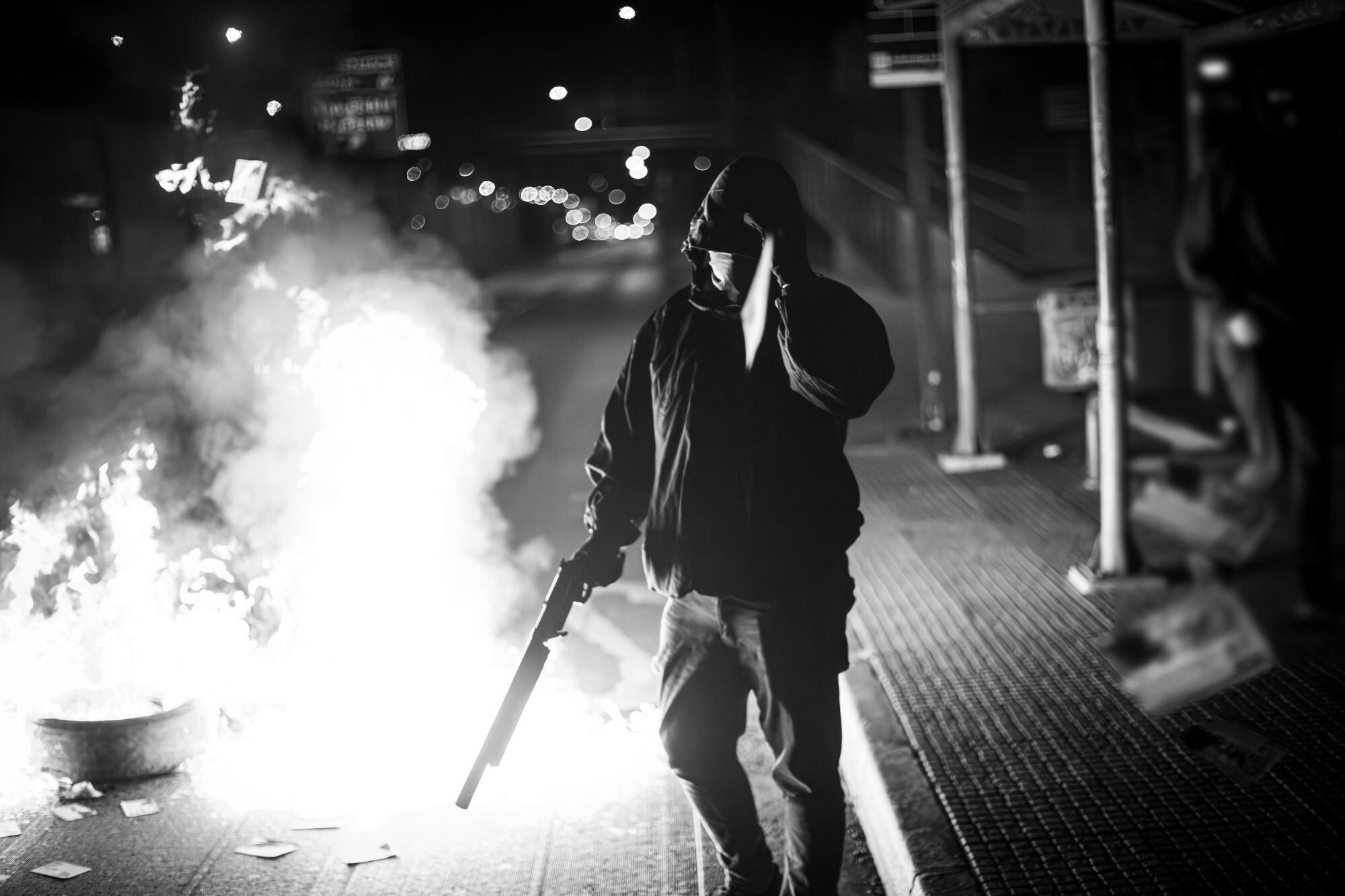
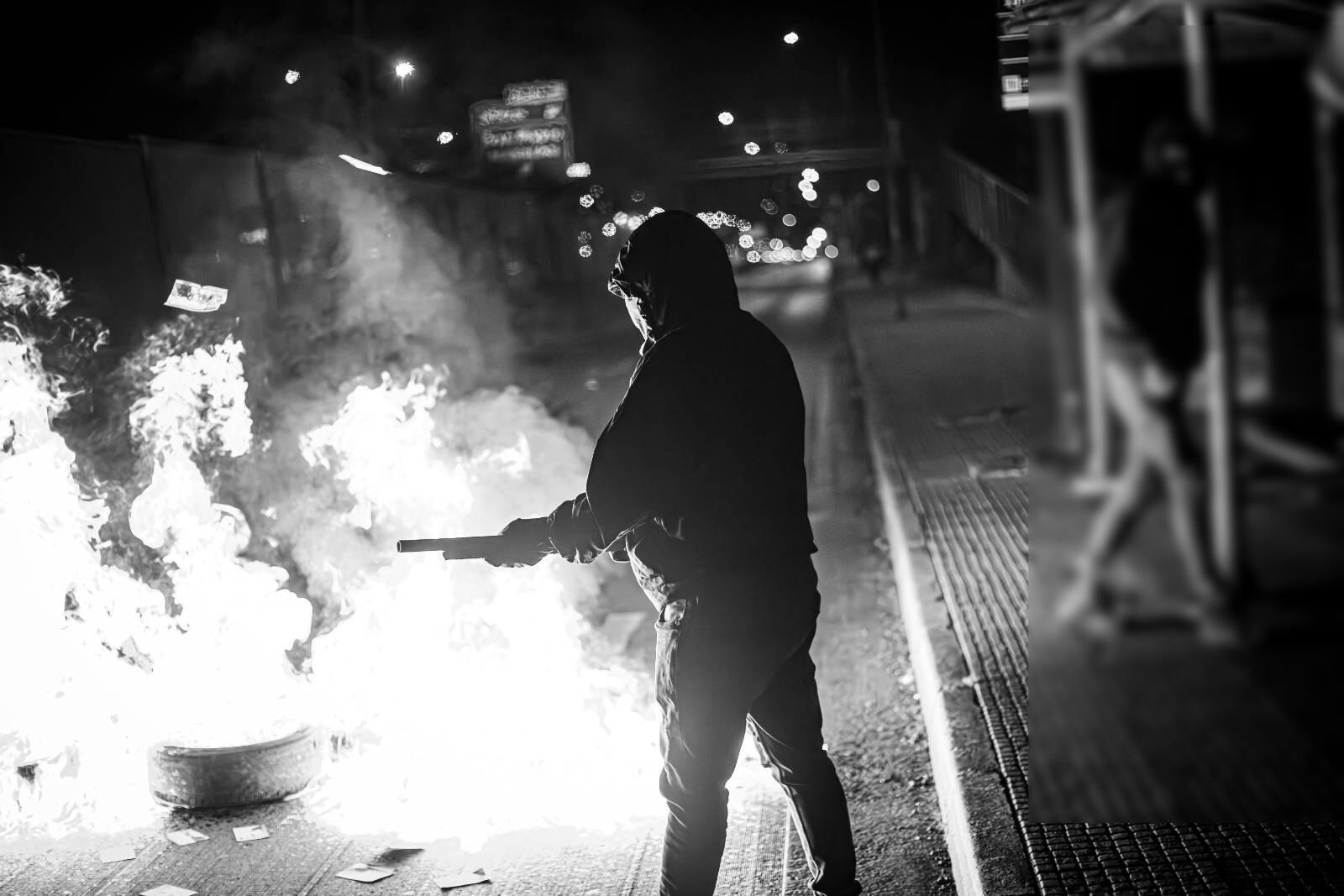
Des personnes au visage masqué ont érigé des barricades à Villa Portales [quartier de la ville d’Estación Central, dans la proche banlieue ouest de Santiago ; NdAtt.], en souvenir du compagnon anarchiste Sebastián Oversluij, à l’approche du douzième anniversaire de son assassinat, suite à une tentative d’expropriation d’une succursale bancaire dans la commune de Pudahuel.

Rien n’est réglé.
Nous n’oublions pas, nous ne pardonnons pas.
Choisis bien ta meute, pour continuer le combat.

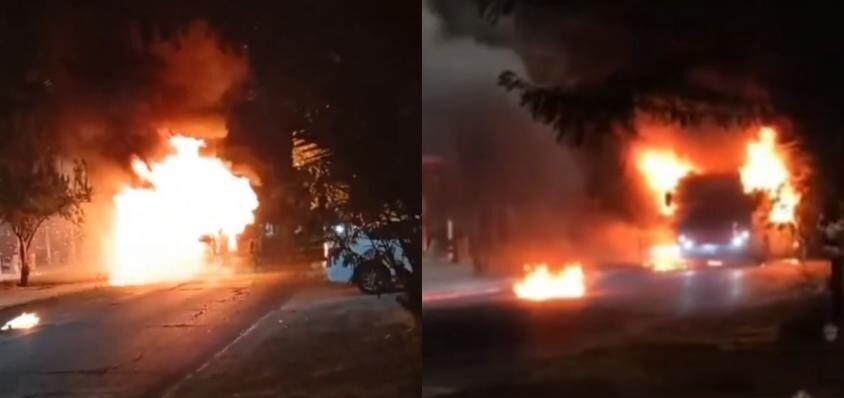
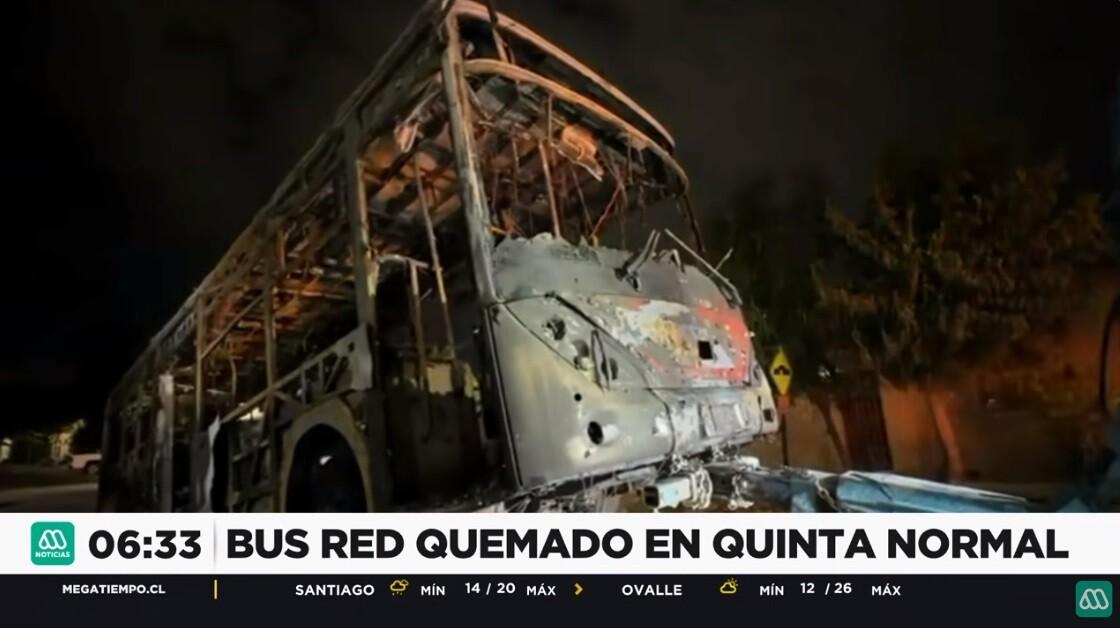
Quinta Normal (Chili) : Revendication de l’attaque incendiaire contre un bus de la RED

Publié le 2025-12-23 08:48:55

Contra Info / dimanche 14 décembre 2025

Action de sabotage contre l’entreprise REDBUS*, attaque contre une machine, en mémoire DES DOUZE ANS DE L’ASSASSINAT DE SEBASTIÁN OVERSLUIJ, QUINZE ANS DE L’ASSASSINAT DES 81 PRISONNIERS DE SAN MIGUEL** et comme forme de rejet du processus électoral***.

FEU AUX URNES ÉLECTORALES ET À LEUR NORMALITÉ
AUCUN PARDON, AUCUN OUBLI

Notes d’Attaque :
* une des entreprise de bus opérant dans la région de Santiago, dont la commune de Quinta Normal fait partie.
** Le 8 décembre 2010, un incendie a éclaté dans cette prison de la région de Santiago, où il y avait plus de 1600 prisonnier.es pour 900 places. Les pompiers ont été appelé par un détenu. À cause de la difficulté de leur intervention et de son retard, l’incendie a provoqué la mort de 81 prisonniers. Sur l’histoire de luttes dans cette prison, voir ici
*** Le 14 décembre 2025 a eu lieu le second tour des élections présidentielles, qui a vu la victoire de José Antonio Kast, candidat d’extrême droite, contre Jeannette Jara, candidate du Parti communiste.

Thessalonique (Grèce) : Revendication de l’incendie du véhicule d’un policier

Publié le 2025-12-23 08:58:50

Act for freedom now! / jeudi 18 décembre 2025

Revendication pour le compagnon Kyriakos Xymitiris

En réponse à l’appel de nos compagnonnes emprisonnées, Marianna M. et Dimitra Z., pour un octobre de commémoration et de lutte insurrectionnelle, le soir du 28 octobre, nous avons mis le feu au véhicule d’un policier, dans la rue Xenophontos, dans le secteur d’Agios Dimitrios, une action entièrement dédiée au compagnon anarchiste, révolutionnaire armé Kyriakos Xymitiris.

Chaque individu qui s’engage dans l’action directe continuelle contre l’État et l’autorité ne fait pas partie de la lutte, mais est la lutte elle-même. La ténacité et le courage de faire face à l’« invincible », le défi lancé à une répression, étatique et personnelle, profondément enracinée, ainsi qu’à la peur qui en découle sont des caractéristiques vitales de la libération de toute forme d’imposition.

C’est pourquoi quiconque meurt dans des actions révolutionnaires/insurrectionnelles meurt libre.

Nous saluons donc notre compagnon, en tournant notre regard, de manière conspirative, vers la lutte elle-même.

Rien ne finit ; pendante leur sommeil paisible, nous visitons leurs maisons, la nuit.

HONNEUR À CEUX/CELLES QUI ONT FAIT DE LA PEUR DE LA MORT UN SOUFFLE DE VIE.

KYRIAKOS XIMITIRIS PRESENT.

Il n'y a pas de journée internationale qui tienne, la solidarité avec les exilé-e-x c'est tous les jours

Publié le 2025-12-24 08:19:43

Le 18 décembre 2025 a eu « lieu » la journée internationale des exilé-e-x. Nous pensons que la solidarité envers les personnes concernées doit se faire tous les jours ! Dans cette logique, nous avons suivi l’appel lancé par Abolish Frontex contre Frontex et la politique frontalière de l’Union Européenne.


“Refugees welcome Frontex Abolish”

Le 18 décembre 2025 a eu « lieu » la journée internationale des exilé-e-x. C’est bien triste de se dire qu’il faut une journée dans l’année pour visibiliser les personnes concernées, si visibilisation il y a vraiment eu … Nous pensons que la solidarité envers les personnes exilé-e-x doit se faire tous les jours !

Dans cette logique, Abolish Frontex a lancé un appel à se mobiliser contre Frontex et la politique frontalière de l’Union Européenne. A Bordeaux, nous avons répondu à cet appel en inscrivant nos revendications sur les murs de la ville.

Vous trouverez dans cet article une partie de l’appel à se mobiliser et des photos de Bordeaux.

“Frontex tue, la police aussi”

“No border / Fuck Frontex”

Frontex est une agence de la Commission européenne et est actuellement une actrice-clé dans la mise en pratique des politiques frontalières de l’Union européenne et dans ses plans stratégiques.

Elle s’est rendue responsable de violations systématiques des droits humains par le biais de ses opérations de déploiement et les refoulements ; son implication dans les expulsions ; sa coopération avec les pays tiers et son rôle dans le renforcement de la sécurité des frontières des États membres de l’UE.

Les politiques frontalières de l’UE sont intrinsèquement racistes et servent à renforcer les structures de pouvoir coloniales et capitalistes.

Il est temps d’abolir Frontex et le système qu’elle représente.

Depuis 1993, la politique militarisée de la forteresse Europe est responsable de la mort de plus de 40.555 personnes. Noyées en Méditerranée ; abattues aux frontières ; mortes suicidées dans des centres de détention, torturées et tuées après avoir été expulsées ; l’UE a du sang sur les mains.

“Non à la militarisation des frontières”

“Frontex : 104 000 déportés depuis 2008”

FRONTEX, C’EST QUOI ?

Cette agence dont le siège est en Pologne et qui a débuté comme une petite agence européenne de plus, est devenue l’une des plus grandes et puissantes de l’Union européenne. En un peu plus de 15 ans le budget qui lui était alloué en 2005 par la Commission européenne a gonflé de plus de 7.560 % pour atteindre 544 millions d’euros en 2021. Ce ne sont pas moins de 5,6 milliards d’euros qui lui sont alloués dans le cadre financier pluriannuel de l’UE (2021- 2027). Frontex recrute une armée de gardes- frontières pouvant posséder et utiliser des armes à feu, et prévoit de disposer de 10 000 gardes d’ici 2027.

L’agence est désormais autorisée à acheter son propre équipement - tels que des navires, des hélicoptères et des drones - au profit des sociétés d’armements, de sécurité et de surveillance, entreprises ayant exercé leur influence tout au long de l’élaboration des politiques frontalières et de défense de l’UE grâce au lobbying.

Frontex agit également en tant qu’"agence de retour" de l’UE, coordonnant les vols d’expulsion conjoints depuis les pays de l’UE, initiant les expulsions, aidant les retours dits "volontaires" et faisant pression sur les pays tiers pour qu’ils réadmettent les réfugiés expulsés.

L’UE défend l’idée que Frontex est nécessaire pour faire face à la "menace" de l’immigration. Cependant dépeindre les personnes qui se déplacent comme une menace pour la sécurité ne fait qu’alimenter la montée des nationalismes, du racisme, de la xénophobie et de l’islamophobie.

“Stop rafles, Stop fichage”

“des frontières tuent, France coupable”

NOS REVENDICATIONS

→ Abolir Frontex
→ Régulariser les personnes en migration
→ Arrêter toutes les expulsions
→ Mettre fin à la détention
→ Arrêter la militarisation des frontières (et le complexe militaro-industriel)
→ Arrêter la surveillance des personnes en déplacement
→ Renforcer la solidarité
→ Mettre un terme au rôle de l’UE qui pousse les gens à se déplacer
→ Liberté de circulation pour toutes et tous
→ Stop au régime frontalier de l’UE

Retrouvez l’appel entier avec le lien suivant :
https://abolishfrontex.org/wp-content/uploads/2021/06/FR_Abolish-Frontex-Demands.pdf

Et parce que la solidarité avec les personnes exilé-e-x c’est aussi se revendiquer antiCRA (Centre de Rétention Administrative) :

“à bas les CRA, ni ici ni ailleurs”

Montpellier (Hérault) : les caisses du flic des HLM sur le grill

Publié le 2025-12-24 08:29:51

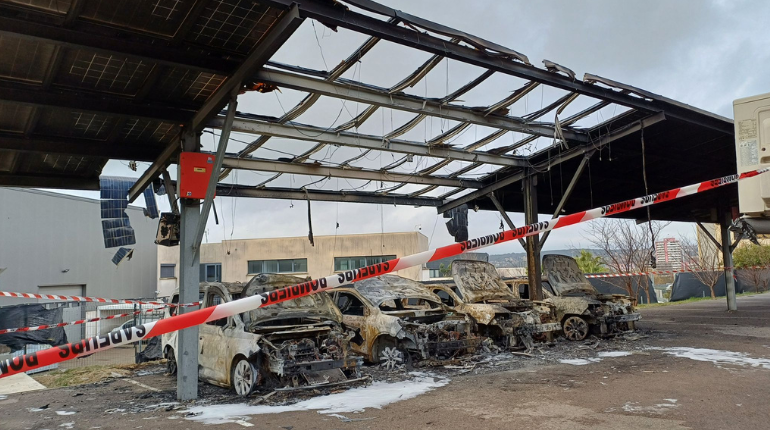
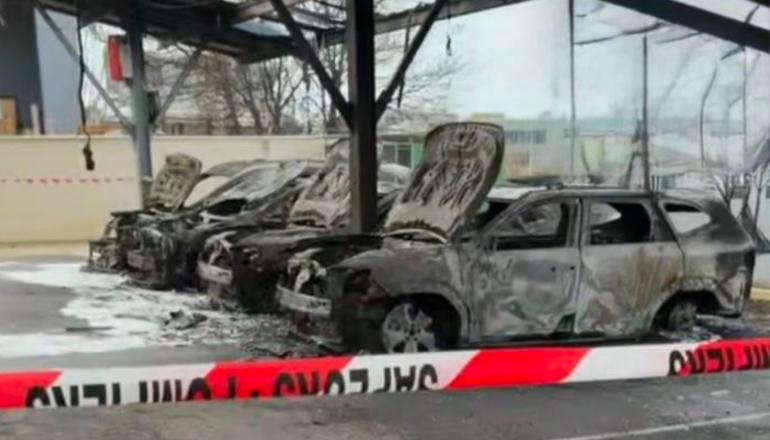
Quatre véhicules du GSRI détruits par un incendie criminel
Midi Libre, 22 décembre 2025 (extrait)

« Une tentative d’intimidation manifeste à l’encontre d’un outil de sécurité qui agit quotidiennement pour restaurer l’ordre, la tranquillité et l’autorité républicaine dans les quartiers » : c’est en ces termes que le Groupement de sûreté résidentielle inter-bailleurs (GSRI) réagit, dans un communiqué publié ce dimanche 21 décembre, à l’incendie criminel perpétré dans la nuit de vendredi à samedi 20 décembre sur quatre de ses véhicules.

Les voitures, qui étaient stationnées sur le parking de la structure, à Montpellier, ont été entièrement détruites. Le sinistre a également occasionné des dégâts sur la couverture photovoltaïque du parking et sur le bâtiment du GSRI situé à proximité. La direction du groupement a déposé plainte samedi 20 décembre et l’enquête de police qui débute a été confiée par le parquet à la division criminalité organisée du Service interdépartemental de la police judiciaire (SIPJ) de Montpellier.

Créé il y a deux ans, le GSRI est un groupement d’intérêt économique (GIE) qui associe sept bailleurs sociaux et la Métropole de Montpellier. Ce dispositif, promesse de campagne de Michaël Delafosse, vise à apporter un climat apaisé dans les quartiers confrontés aux incivilités, aux squats des parties communes et aux trafics. Ses 36 agents effectuent des patrouilles quotidiennes entre 16 h et 2 h du matin dans une trentaine de résidences HLM.

Pays-Bas : Des camions de transport de vaches sabotés

Publié le 2025-12-24 08:39:38

North American Animal Liberation Press Office / lundi 15 décembre 2025

Au petit matin du 14 décembre, aux Pays-Bas, nous avons visité un centre logistique utilisé pour le transport de vaches. Dans tout le pays, il y a 55 endroits qui ont une licence pour transporter des animaux de cette façon. Ces centres logistiques sont les petits points faibles qui permettent à tous les autres abus de l’industrie [de la viande] de se produire.

Le temps était très brumeux, ce qui a été un grand avantage pour nous. Après avoir traversé quarante centimètres d’excréments de vache, avec des chaussures non faites pour marcher dans la merde de vache, et après avoir coupé une clôture, nous sommes arrivé.es dans une zone dégagée.

À notre droite, il y avait une étable et à notre gauche trois camions utilisés pour les transports. Aujourd’hui, nous étions là pour les camions. Nous avons coupé leurs freins, collé les valves d’air de leurs pneus et décidé de laisser quelques messages sur les camions eux-mêmes, tout en essayant de ne pas trop déranger les vaches avec cette visite inattendue.

Après environ une demi-heure passée à traîner là, nous sommes rentré.es, sales mais sain.es et sauf.ves.

Au début de la semaine, le collectif Ongehoord a publié des images de cinq centres logistiques. Cela montrait des coups, l’électrocution, à quarante reprises, d’une vache inerte et une autre, qui ne pouvait plus se déplacer par elle-même, traînée avec un chariot élévateur. Il y a deux ans, l’un de ces centres logistiques a déjà été placé sous la supervision, supposément plus stricte, de la NVWA (l’Autorité pour la sécurité des produits alimentaires et de consommation des Pays-Bas) en réponse à des images précédentes, ce qui, bien entendu, n’a pas amélioré la situation.

Pour nos milieux, ces choses sont bouleversantes mais pas surprenantes, c’était donc tellement réconfortant de voir l’indignation publique quand ces images ont fait la une des journaux. Les agriculteurs impliqués ont été condamnés non seulement par nous, mais aussi par le grand public. Si nous pouvons montrer aux gens qu’on ne peut pas faire confiance à l’État pour protéger le bien-être des animaux et que l’industrie est fondée sur le meurtre et la maltraitance, alors l’industrie est condamnée.

[Italie] Le prisonnier anarchiste Juan Sorroche solidaire de la grève de la faim de Prisoners for Palestine

Publié le 2025-12-26 09:49:35

Initialement publié sur il Rovescio le 05/12/2025, qui ont reçu tardivement une lettre du compagnon Juan Sorroche datée du 24/11/2025, nous publions d’autant plus tardivement une traduction de cette lettre, écrite à l’occasion d’une semaine de solidarité du compagnon du 26 novembre au 3 décembre, en solidarité avec la grève de la faim en cours des Prisonnier.es pour la Palestine.


Solidarité avec les prisonnier-es palestinien-nes du monde entier

Solidarité avec les prisonnier-es de « Palestine Action »

Cette réflexion m’est venue en réaction aux protestations des prisonnier-es de « Palestine Action », en grève de la faim depuis le 14/11/2025 dans les prisons britanniques, ainsi qu’à celles et ceux qui les ont rejoints par solidarité.

Le compagnon anarchiste Stecco, prisonnier en Italie, a rejoint la grève de la faim du 7 au 28 novembre, tout comme Massimo, un compagnon anarchiste actuellement en semi-liberté à la prison de Trente, qui a manifesté sa solidarité et sa protestation en renonçant à une semaine de travail et donc à ses sorties quotidiennes.

J’ai moi aussi décidé, par un geste symbolique de solidarité avec les revendications de cette grève de la faim, de me joindre à cette protestation le 26/11/2025 en renonçant à mes heures d’air frais (dans la cour) pendant une semaine dans la prison de TerniAS2, où je suis détenu, en signe de solidarité libertaire et internationaliste, que j’accompagne de ces mots.

Je tiens tout d’abord à vous rappeler combien le nombre d’ENFANTS PRISONNIER-ES de l’État israélien me bouleverse ! Et avant tout, ma solidarité va aux 17 000 prisonnier-es de l’État sioniste en Palestine et aux prisonnier-es palestinien-nes du monde entier ! Ma solidarité révolutionnaire et mon admiration pour le courage de la résistance des Palestinien-nes opprimé-es, des combattant-es partisan-es qui luttent aujourd’hui encore, depuis soixante-quinze ans, contre le colonialisme israélien, sioniste et occidental, par une guérilla armée !

Et plus particulièrement, j’adresse ma solidarité en Italie à Ali et Mansour, et surtout à mon ami et frère Anan, partisan palestinien, récemment transféré d’ici, emmené et enfermé à Melfi de manière punitive par l’État italien, complice obéissant des sionistes de l’État d’Israël.

De même que je tiens à me souvenir des opprimé-es qui souffrent de la guerre à travers le monde ! Et du peuple palestinien en particulier, avec ses 67 000 victimes assassinées par les États capitalistes occidentaux, dont 20 000 ENFANTS, soit près de la moitié du total ! Cette guerre infâme et cette violence raciste structurelle, intrinsèques à notre société occidentale étatiste, capitaliste et colonialiste, sont à l’origine de la société israélienne.

Pour ce faire, dans nos sociétés, nous avons d’abord été habitué-es à la violence et au racisme SYSTEMIQUES des États capitalistes et éduqués aux « grandes » valeurs politico-économiques DEMOCRATIQUES. Il faut le DIRE HAUT ET FORT. Je tiens à rappeler les génocides planifiés depuis des siècles par les démocraties occidentales ! Qui, AUJOURD’HUI ENCORE, progressent sans entrave, et maintenant, à Gaza et en Cisjordanie, avec la complicité de l’Occident, qui, sous le couvert de l’ONU, promet « droits et paix », mais qui, en réalité, vend les bombes et les armes qui massacrent. De même, les DIFFERENTES GUERRES D’ETAT CAPITALISTES ont été planifiées scientifiquement pendant des décennies (par le biais de lois) dans l’indifférence de nos sociétés occidentales. Un exemple parmi d’autres : les massacres incessants de migrant-es en Méditerranée, qui se produisent dans l’indifférence raciste structurelle perpétuée par le silence complice de la quasi-totalité de nos sociétés occidentales. Ce préjudice, et bien d’autres, est ce que l’interclassisme démocratique inflige à nos vies et à nos luttes. Je crois que, sur le plan pratique de la lutte autonome et anti-autoritaire, il épuise nos précieuses énergies, nous orientant délibérément vers des formes de solidarité spectaculaires qui nous privent complètement des quelques forces réelles dont nous disposons. De plus, il ne fait donc aucune incidence sur la possibilité de changements radicaux dans la lutte des classes et la lutte révolutionnaire, ni sur la réalité du changement dans notre société, nous canalisant vers une paix sociale qui n’est autre que la continuation de la guerre étato-capitaliste et de la répression externe et interne qui en découle. Il est également juste de se souvenir qu’il y a aujourd’hui des compagnon-nes, prisonnier-es communistes révolutionnaires en Italie, certain-es incarcéré-es depuis plus de 40 ans, qui, il y a des décennies, ont combattu dans la lutte armée contre l’impérialisme. Se souvenir qu’ils et elles ont aussi, historiquement, combattu dans la résistance armée palestinienne, en solidarité avec le peuple palestinien, nous aide à nous souvenir de l’histoire révolutionnaire, à donner la juste dimension à la solidarité contre la répression d’État, comme une boussole, à fournir la justification sociale et historique appropriée aux futures luttes révolutionnaires et libertaires !

Solidarité avec mon ami et compagnon anarchiste Alfredo Cospito, emprisonné sous le régime du 41-bis pour actions révolutionnaires contre Ansaldo. Contre le 41-bis, tous-tes dehors !

Solidarité avec la compagnonne prisonnière Anna Beniamino et tous-tes les prisonnier-es anarchistes et libertaires du monde entier !

L’État italien, tout comme l’État britannique, est complice des guerres coloniales et du génocide perpétrés par Israël, ainsi que de la répression intérieure, notamment par l’emprisonnement de compagnon-es  révolutionnaires communistes et anarchistes : en Italie, trois partisans palestiniens, dont Anan Yaeshh ; en Angleterre, par l’arrestation de militant-es de Palestine Action et la détention de militant-es indépendantistes irlandais-es. Ces États sont également complices de l’incarcération de 17 000 prisonnier-es palestinien-nes dans les prisons israéliennes.

Tout est lié !

Ce que les États italien et britannique tentent de faire passer aujourd’hui, tant dans le procès d’Anan que dans celui de « Palestine Action », en les accusant de terrorisme et en refusant de reconnaître leur résistance à la libération du peuple palestinien et au colonialisme occidental, est un message clair sur le colonialisme occidental dans son ensemble et sur la complicité italienne et britannique dans le génocide.

Solidarité avec les prisonnier-es de « Palestine Action » !

Liberté pour tous-tes les prisonnier-es du monde !

Pour la destruction de toutes les prisons, des frontières, de tous les États et du capitalisme !

Contre la guerre !

Révolution liberaire !

Juan Sorroche

(envoyé le 24/11/2025)

(extrait de la section AS2 de la prison de Terni) 

[Indonésie] Trois anarchistes/anti-autoritaires ont été arrêté-es à Jakarta

Publié le 2025-12-26 09:59:30

Résumé à partir de Legiun, le 08/12/2025, qui a republié plusieurs articles de presse.

La police métropolitaine de Jakarta (Polda Metro Jaya) a arrêté trois jeunes qui projetaient de provoquer des émeutes lors des manifestations à Jakarta. Les trois suspects, identifiés comme BDM (20 ans), TSF (22 ans) et YM (23 ans), prévoyaient de déclencher des émeutes à l’occasion de la Journée mondiale des droits de l’homme, le mercredi 10 décembre 2025.

La première personne, BDM, aurait été arrêtée par la police en possession de six « bouteilles usagées qui étaient en cour de transformation en cocktails molotovs » à son domicile dans le centre de Jakarta. La seconde personne, TSF, aurait été arrêtée dans la ville de Bekasi, suspectée d’avoir commandé les cocktails molotovs à BDM. La troisième personne, YM, a été arrêtée dans la ville de Bandung, aussi suspectée de préparer des cocktails molotovs, mais pour l’instant sans lien avec les deux premières personnes arrêtées.

Après confiscation des téléphones portables, la « Direction de la cybercriminalité de la police métropolitaine de Jakarta » a designé ces trois personnes comme étant derrière des comptes instagram d’agitation, notamment anarchistes. BDM serait ainsi l’administrateur du compte @_bahan_peledak, qui publie du contenu anarchiste et insurrectionnaliste, que les flics considèrent comme « menaces et provocations terroristes ». TSF serait l’administrateur du compte @verdatius, un « média alternatif d’agitation et de propagande » qui publie aussi du contenu anarchiste, et ce que les flics considèrent comme « des messages incitant à l’émeute ».  YM serait l’administrateur du compte @catsrebel, qui publie aussi du contenu anarchiste, et ce que les flics considèrent comme « des menaces de violence ». Une photo d’un cocktail molotov sur ce dernier compte aurait poussé les flics à arrêter YM.

Le contenu posté sur les trois comptes d’agitation est suffisant pour que les flics parlent d’un « réseau » soupçonné « d’avoir préparé des émeutes lors des manifestations du 10 décembre en publiant des instructions sur la fabrication de bombes artisanales » et qui « prévoyaient d’attaquer des commissariats et d’attirer les forces de l’ordre dans des lieux prédéterminés ». D’autres comptes auraient été identifiés comme affilés à ce réseau, laissant sous-entendre davantage de répression à venir dans la chasse aux anarchistes par l’Etat indonésien.


Un article compilé sur le même site revient aussi sur une audience au tribunal, le 8 décembre, de 7 inculpé-es dans l’affaire des 21 personnes poursuivies pour l’invasion du parlement à Senayan, Jakarta, et le lancer de cocktails molotovs et de pierres sur les flics qui le gardaient, lors de la révolte d’août. Ces sept avaient fait, via leur avocat, des demandes de nullité et de relaxe compte-tenu d’inculpations vides et vagues, notamment en ce qui concerne les lieux et l’heure à laquelle les événements se sont produits. Un autre faisait une demande de relaxe considérant que le rapport d’examination était illégal, compte-tenu de pressions et menaces [de la part des flics], deux autres sur des procédures non habituelles de la police. Toutes les demandes ont été rejetées par le juge. 

Un autre article aussi compilé dans le même texte revient sur une audience du 4 décembre, par rapport à l’affaire de 33 personnes inculpées pour l’attaque du commissariat du Nord de Jakarta le 31 août, lors des révoltes. 25 témoins, tous des flics du comico en question, ont ainsi témoigné sur l’attaque en question, certains en tant que victimes, et d’autres en tant qu’agents ayant mené des arrestations. Un flic raconte alors qu’une foule en moto est arrivée au commissariat dans la soirée et a lancé de nombreux cocktails molotovs – ainsi que des pierres, des bouts de bois, des bouts de métal, et des feux d’artifice – pendant quasiment sept heures, forçant la flicaille à évacuer le poulailler. Il chouine aussi d’avoir été brûlé par un tir de feu d’artifice.

Calais (Pas-de-Calais) : Le député RN s’est fait péter sa vitrine

Publié le 2025-12-26 10:09:38

infos issues du compte Facebook du facho / lundi 22 décembre 2025

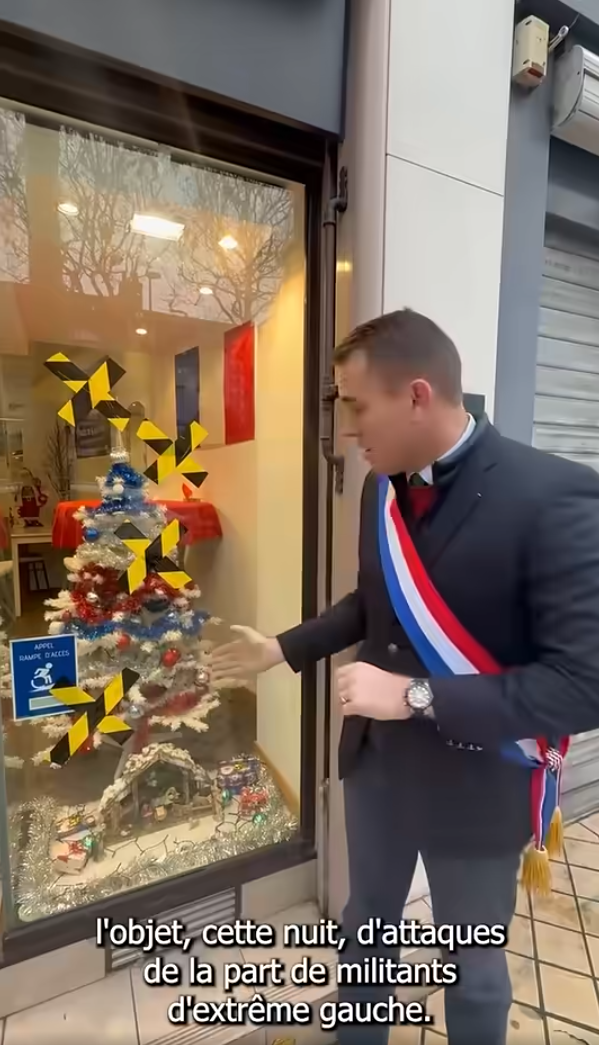
Le député RN de Calais Marc de Fleurian pleurniche dans une vidéo facebook après s’être fait péter la vitrine de son local de campagne pour les municipales :

« Chers amis, je me trouve devant ma vitrine de Noël, qui a fait l’objet, cette nuit, d’attaques de la part de militants d’extrême gauche… blabla, ouin-ouin… »

Pour l’instant, la presse n’en a pas (encore?) dit mot.

Munich,(Germany) : Here is the translation of N and M’s letter published after their release.

Publié le 2025-12-26 10:19:37

As previously reported, we (Nathalie and Manuel) were unexpectedly released from prison on September 22.
in German 

(Below is a brief update on our release and the first few weeks afterward, followed by the subsequent publication of an open letter from prison dated August 2025).

At around 12:30 p.m., Nathalie’s cell door opened and a guard informed her that she was being released. She was not allowed to see her fellow prisoners, who were either locked up or at work at the time, except for a few to whom she was allowed to give small amounts of food. Then she was escorted out at around 4 p.m.

Manuel was notified of his release around 2 p.m. after his yard time. Since his cell block was open at the time he was able to give away more or less all of his belongings and say goodbye to his fellow inmates.

Before we were released from custody, a police officer from K43 was waiting for each of us, for Manuel it was KHK Unglaub and for Nathalie it was KOK Meyer, to give us a so-called “dangerous person warning.” Essentially, this consisted of warning us not to commit any crimes—not even “minor offenses” (KOK Meyer)—and referring us to an in-house de-radicalization program. We were assured that the doors of K43 would always be open to us.

While KHK Unglaub still refused to answer the question of whether we were now under surveillance, because he felt that his concerns had not been listened to properly and, above all, had been met with too much smirking, it took less than three minutes after our release for the surveillance officers to reveal themselves. When Manuel wanted to take a taxi (M QF 1185), the driver (an observer) gave himself away by turning his face away instead of simply replying that he was already booked, etc., and at the same time frantically pressed a kind of “panic button” in his right trouser pocket, while making sure that the vehicle was definitely locked and making energetic gestures with his hands, as if to say “go away.” It just looked like an exposed observer, not like a taxi driver during Oktoberfest.

So, back to square one. And that’s how it would remain in the days to come. Sometimes they tried harder, sometimes less so; sometimes they shamelessly took nude photos of us bathing in the Isar using a telephoto lens, sometimes they spied on us without such technical aids and, when within earshot, quickly turned away to avoid being addressed. When Manuel remembered the promise of open doors at K43 and wanted to see the necessary court orders for long-term surveillance and the use of technical means, an apparently easily irritable KHK Unglaub literally yelled at him that there were no orders and that Mr. and Mrs. Findeisen and Obermeier were responsible, as well as the General-SA. But as we already know from humanistic propaganda lessons based on the stories of Kafka, the gates of the General SA remained closed, of course, and a doorman barked at us that we still had to wait and needed an appointment, and that this was the General SA, where we had to submit our requests in writing and couldn’t just barge in during business hours. Fortunately, we were already used to all this from everyday life in prison …

But why were we released in the first place? In all the commotion, this had been deliberately concealed from us. One might say that it doesn’t matter—after all, we’re out. In fact, it was the Higher Regional Court, or more precisely the judicial association led by Judge Höhne, that had ordered our immediate release. The reason: our trial had clearly been delayed. Since the charges were brought in mid/late March, the judicial association Himmelstoß & Co., known as the 29th Criminal Chamber at the Munich I Regional Court (State Security Chamber), had still not decided when the trial was to be scheduled, and had even proposed dates as late as January 2026. This was now too obvious, because although it is common practice in the Bavarian justice system to leave remand prisoners languishing in jail, regularly exceeding the actual 6-month limit, this practice is disreputable when it is so blatant.

As KHK in Findeisen, the caring policewoman we know from the evening of the arrest, had promised Nathalie back then, our cabin in the woods was to be razed to the ground soon after our release. Heavy equipment was used to tear down our former home, cutting a wild swath through the undergrowth of the growing forest for this purpose. So the police keep their word.

The case against us both, as well as one other person, is tentatively planned for the end of January. Thus far, the court process is scheduled to last 10 days.

We would like to once again thank all of those in solidarity for sending postcards, letters, greetings, and all other possible forms of support, that reached us in prison. You gave us the strength we needed.

Nothing is finished, everything continues.

REBELLION IN TIMES OF TOTAL POLICE SURVEILLANCE

A letter from the otherworld about the latest wave of repression against Munich anarchists

Anyone who would not normally expect to encounter a cop in the woods, of all places, has been proven wrong over the past year in the Munich area. For the gentlemen and ladies of Munich’s State Security Service (SS) had set off into the woods, but not to leave behind the misery of their existence as henchmen of an exploitative system, bored by the concrete gray of their offices and the never-ending stacks of forms that make up the main work of a good German police officer, and to embark on the difficult but wonderful search for a freer and more dignified way of life. No, their mission was similar to the expeditions of so many explorers into the deep expanses of the world’s primeval forests: to study and research life they did not understand in order to better control it.

In the Munich forests, the SS cops set out to study the unknown: two anarchists who had made themselves at home in these woods. After observing, eavesdropping on, photographing, tracking, and pursuing them for quite some time, they took the logical next step: they captured these anarchists, locked them in cages, and searched and destroyed their huts. They also raided the homes of various other people they associate with them, stole all kinds of possessions, and now tried to blackmail them into providing information about their subjects of investigation by interrogating them as witnesses. And so these two anarchists find themselves robbed of their freedom and their loved ones, degraded to a number to be administered, in a stone tomb, condemned to wait…

These two anarchists are us, Manuel and Nathalie. In recent years, we have had the dubious honor of receiving special attention from the Bavarian Office for the Protection of the Constitution and the Munich State Security Service. Now, on February 26 of this year (2025), we were arrested, followed by coordinated house searches of alleged “contact persons” of ours in Munich, the surrounding area, and Austria.

We have decided to write a joint letter to shed some light on the background of the latest wave of repression against anarchists in Munich and beyond by the Munich State Security Service (SS) and the Bavarian Central Office for Combating Extremism and Terrorism (ZET). We also want to report on the methods and tactics the cops have been using for several years now to try to put an end to anarchist projects, to overwhelm an entire milieu with repression, to persecute both of us in just about every conceivable way, and to go into more detail about some aspects of our arrest.

But what exactly happened on the evening of February 26th from our point of view?

Around 8:30 p.m., we were both sitting in a Munich library when we were suddenly knocked to the ground and handcuffed by around 20 plainclothes cops. The reason: a remand order for alleged flight risk in the “Zündlumpen” trial, which had been going on for three years. We had allegedly tried to evade the trial because we were living in a self-built hut in the woods in the south of Munich.

They also announced the opening of further investigations against us.

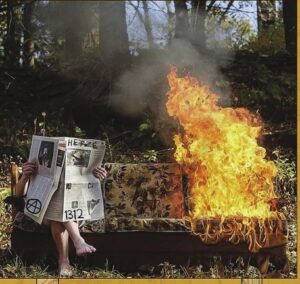
They accuse us of publishing a newspaper called “Hetzblatt gegen den Windpark” (Agitational paper against the Wind Farm) together with two (now three) other defendants. This newspaper, which appeared once in the fall of 2024, was directed against the construction of a wind farm in the Öttinger Forest, a showcase project of the local chemical industry there. The newspaper is said to have condoned criminal acts and insulted politicians.

In addition, they accuse both of us of jointly committing a total of five acts of arson in the period 2023/24. Manuel is also accused of a sixth act of arson. These incidents involve arson attacks on construction machinery at a geothermal construction site in Polling, as well as on a machine parked nearby for forestry work and on the cable shaft of an adjacent railway line in October 2023, on forestry machines in the Hofoldinger Forest in December 2023, on work machines in the Südpark area of Munich, also in December 2023 (Manuel is the only one charged with this), a rail vehicle in Oberhaching in July 2024, a wind power plant in Berg in September 2024, and concrete mixers, a wheel loader, and a conveyor belt belonging to a concrete company, also in September 2024.

They combined our arrest with coordinated house searches late Wednesday evening in Munich, the surrounding area, and Austria. In addition to our “storage facilities” in the forest and a basement room rented by Nathalie, the searches mainly targeted other defendants in the “Hetzblatt” case and their shared apartments. However, house searches were also explicitly directed against alleged “close contacts” of ours, who have been harassed by the cops as “witnesses” in the arson case. In addition, numerous people have received witness summonses from the public prosecutor’s office.

So while the cops harass numerous people they consider to be part of our circle, we are both taken separately (and we have not seen each other again since then) to the premises of the State Security Service (SS) and the Police Headquarters (PP). After a very brief official interrogation, as we both refused to make any statements, we had to endure threats and defamation against each other for quite some time, as well as “well-meaning” advice, such as the suggestion to consider emigrating.

Around midnight, a cop from the canine unit arrives to wipe our necks with a handkerchief and “take a scent sample.” We are then taken to the cozy detention cells of the Munich Police Headquarters (PP), where we are allowed to spend the rest of the night and the next morning: constant light, day and night, a window that cannot be seen through or opened, no pillow, and from 6 a.m. onwards, no blanket and no cover for the plastic mattress. In addition, the tap doesn’t work for Nathalie, which the guards don’t care about in the slightest, so she ultimately has to drink from the toilet. But eventually it’s over and we are both brought before the magistrate, Manuel in the district court, Nathalie in the men’s prison at Stadelheim. One of us is then taken to the men’s prison in Stadelheim, the other to the women’s prison in Aichach.

A week later, we are picked up again by the cops and carted off to the forensic medicine department at the Nussbaum Clinic for a physical examination. On the way there and back, we both have to listen to more defamation about each other and further threats intended to persuade us to make a statement. Since then, the cops have left us alone.

WHO ARMS FOR WAR …
An overview of the repression against the “Zündlumpen” and Munich anarchists against their social background
At the beginning of 2020, a propaganda shockwave rolled out from Wuhan, China, across almost the entire world. One of the virus strains escaped from a laboratory where military-commissioned research was being conducted to increase the contagiousness of coronaviruses using spike proteins. Was it intentional? And even if not, what is the purpose of such research? Isn’t the use of such weapons supposedly a serious war crime? We ordinary people will not have the opportunity to discuss these questions. While the Chinese state is trying to completely seal off the Wuhan region, setting up military checkpoints, imposing curfews, and enforcing strict compliance with technological means previously unknown to the world, even in the darkest dystopias, the US immediately withdraws all its researchers from the laboratory in question and, like the rest of the Western world, whose governments had been more or less informed by their secret services, as we now know, concentrate on telling horror stories about bats and markets where they can be bought.

Is it fear of what we ourselves have created, or is it merely a large-scale, global experiment? Or is it more of a kind of economic war under false pretences? Perhaps it is a waste of time to try to clarify this today, even if it was the prelude to a new era of global wars. In any case, the fact is that within a few days, curfews and bans on contact with other people are being imposed on the populations of large parts of Europe, following China’s example. The global economy and trade are being shut down abruptly, and China is responding with a “Zero Covid” policy of total cybernetic confinement and control, which is being followed with great interest and admiration by (democratic) despots around the world. Bill Gates and all the other vaccine fascists, including large sections of the German “Antifa” movement, who at times openly called for a German version of China’s totalitarian “Zero Covid” policy, publicly denounced so-called “corona deniers,” i.e., people who refuse to accept the suspension of their rights, which they had previously believed to be inalienable, and who demonstrate against the government’s measures, —as Nazis and “deniers,” in line with the propaganda of the authorities – and ultimately even tend to overlook the fact that numerous marginalized groups, whose rights they otherwise so eagerly claimed to defend, are particularly hard hit by the measures they demanded and supported, are crawling out of their holes and shaping an alarmist and mendacious public discourse of “stay-at-home,” a kind of general mobilization for absence. The police enforce all this with beatings, fines, and arrests if necessary, checking people in the park, breaking up parties of young people, and pursuing anyone who is still out and about at night in violation of the curfew. But what are we telling you? You surely remember this time well yourselves.

So while the state is bringing the press into line and installing a whole new kind of nationalism, that of “solidarity” compulsory vaccination, which of course is not compulsory; only “freedom without vaccination, that won’t happen,” says Markus SöDDR, as some called him at the time, it goes without saying that repression must also be unleashed against all those who are not prepared to put on the (medically) prescribed muzzles. It is the big moment for the newly founded Bavarian Central Office for Combating Extremism and Terrorism (ZET), which immediately begins its work and thus the persecution of vaccination opponents, “corona deniers,” anarchists, and the like. Bavarian Interior Minister Joachim Herrmann himself will open the hunt for anarchists in Munich because of an exchange he started with the “Zündlumpen,” an “anarchist weekly” that was published in Munich at the time and was one of the very first critics of the coronavirus measures, or more precisely because of an overly threatening-looking winking smiley face.

At the behest of the Bavarian police chief, secret and less secret police forces are taking action. With the approval of parliamentarians Katharina Schulze, Alfred Sauter, and Alexander Flierl, the Bavarian Office for the Protection of the Constitution is monitoring the mail of around 15 (suspected) anarchists and conducting surveillance on this group of individuals. Although he repeatedly extends his permission to do so because his observations have “not yet yielded the desired findings,” he willingly conjures up three “suspects of the Zündlumpen editorial team” when the less secretive police drop their investigation into the Zündlumpen due to a lack of promising leads. Three people is the absolute minimum for proceedings under Section 129, “formation of a criminal organization,” which is supposed to be equivalent to publishing a newspaper, and such proceedings in turn provide the necessary basis for the implementation and subsequent use in criminal proceedings of surveillance measures, telephone and postal monitoring, etc. What a coincidence.

This was followed by raids, DNA sampling, and the theft of an entire printing press, as well as thousands of anarchist publications, in an obvious attempt to prevent the spread of anarchist ideas. The police treated the stolen printing shop like a crime scene, securing fingerprints and DNA traces. Among other things, they collected cigarette butts from an ashtray and, lo and behold, they had a fourth suspect. Although the LKA laboratory had by then been able to rule out all printers from this printing shop as having been used to produce the “Zündlumpen,” who cares about that?

After another raid, the Munich State Security Police, led by Florian O., Jannine F., and Johannes R., devoted themselves primarily to reading. They eventually named their investigation team “EG Schrift” (EG Writing). Thanks to the extensive notes of this reading group, we now not only finally know what some of the thickest volumes of anarchist works actually contain, but we also gained a few translations and learned a lot about the biblical and Hobbesian figure of Leviathan. Parallel to their anarchist reading circles, the cops also managed to get the premises of the anarchist library “Frevel” terminated by repeatedly putting pressure on the landlord. Florian O. also shows up at the job center and then writes in a triumphant memo that he has obtained the cancellation or non-renewal of the benefits of both of us, Nathalie and Manuel. Due to the resulting lack of rent, the landlord, who had previously been investigating our supposed presence in the apartment on behalf of the cops, evicted us from the apartment by his own authority.

The cops, meanwhile, who are hunting for Nathalie’s blood or saliva in order to obtain a DNA sample from her, which, according to a court ruling, will help complete the “mosaic” of the indictment, are monitoring Nathalie’s bank account and specifically withdrawals from it, her parents’ cell phones and telephone lines, investigate course participant lists at Nathalie’s former vocational school—which she attended over 10 years ago—ask all kinds of online platforms for any user data, accounts, and delivery addresses, carry out surveillance, and finally pick Nathalie up at her parents’ house on Christmas Day and secretly follow her from there to a supposed temporary residence. However, obtaining her DNA does not seem to be important to the MEK surveillance forces and their SS clients. After two weeks of round-the-clock surveillance, they break off their efforts without having asked even once about that special juice.

Instead, over a month later, a couple of rowdy cops show up and simply pull Nathalie and me off our bikes during a staged “random” check. What began (almost) like something out of Hollywood ultimately ends in an act of bureaucracy, the favorite activity of the “real police.”

EG RAUTE, THE ANARCHISTS, AND THE ARSONIST
While the cops hunt down a newspaper, steal printing presses and paper, and form reading circles to read through hundreds of anarchist publications they seized during the 2022 raids, they are faced with a completely different problem: A “firedevil” has been wreaking havoc in Bavaria for several years now. At least, that is how the local press has been referring to a “series” of arson attacks targeting cars, construction and forestry machinery, infrastructure facilities such as radio masts, railway facilities, geothermal energy, wind power, and even the police’s own infrastructure. There has been talk of up to 50 arson attacks and 25 million euros in property damage. Since August 2023, a specially established investigation team, known as “EG Raute,” has been investigating.
But who could it be? Even after years of investigation, the cops are still in the dark. How embarrassing for Germany’s “safest city” and the Bavarian police force, known for its toughness… er, Free State. Well, at least for individual acts, as the cops write extra cautiously in a press release, they suspect an “extremist” motive. More specifically, an anarchist one.

Because, as the BKA has painstakingly and intensively ascertained through their investigation, anarchists don’t like the state. They even see it as a “repressive coercive authority” that “must be smashed.” They also found out that “classical” anarchists consider “attacks against infrastructure facilities to be an effective means” because infrastructure serves the state “as an important instrument for monitoring and controlling the population” and ensures “the orderly functioning of the system.”

However, the cops have a problem: in this “series,” with very few exceptions, they have been unable to find any letters of confession (known as “SBS” or ‘Selbstbezichtigungsschreiben’ in officialese) that would allow them to classify the acts as “political.”

But the BKA believes that this is more of an argument in favor of the attacks being anarchist in nature, because “SBS” are superfluous from an anarchist point of view, as the crimes are supposed to be so “well thought-out and ideologically clear” that they speak for themselves. In the case of the crimes they classify as part of the “series,” they believe this to be true. Even if an SBS were to exist, this would not argue against anarchists being the perpetrators. Logical, since that is also stated in the document. However, instead of the SBS, “documentation” is more common in anarchist publications.

And this brings us back to our reading circles, which were probably set up not only by the Munich SS cops, but also by the BKA for the purpose of studying anarchist writings. The BKA analyzes anarchist publications and websites such as “Zündlumpen,” “Zündlappen,” “Sozialer Zorn” (both of which are described as “successor projects” to “Zündlumpen”), “Sans Nom,” and “Switch Off” with regard to their reporting on various arson attacks in Bavaria, desperately trying to find possible personal connections to the Munich area and the reported crimes, and speculating about the authorship of articles and the possible existence of an “international anarchist group.”
At this point, we, Manuel and Nathalie, as alleged co-editors of “Zündlumpen,” come under the scrutiny of the EG Raute. Since French is an incredibly rare language in Germany, and even more so in France, the BKA speculates that Nathalie, due to her French roots, could be the author and translator of French-language articles about various arson attacks in Bavaria on the French-language website “Sans Nom.” However, they cannot find any more concrete evidence than the fact that Nathalie speaks French fluently. Currently, the EG Raute is discovering a whole series of incredible “circumstantial evidence” against us.

Footprints
or: The evidence room ghost

As we all know, arsonists have magical powers, and perhaps they are also able to conjure things out of and back into the K43 evidence room. In any case, the cops found “shoe prints” during the arson attack on the geothermal construction site in Polling in October 2023, as well as during the arson attacks on forestry machines in the Hofoldinger Forest in December 2023. “Shoe print traces” that are said to have the same profile as a pair of unused shoes that they confiscated during house searches at the end of April 2022 in connection with the “Zündlumpen” proceedings in a basement room rented by Nathalie. Abrakadabra! – Incidentally, this is a sole profile that they attribute to several no-name models from Tedi and Kik.

A bicycle rides across a bridge
But that’s not all the cops have discovered that’s sensational: They claim to have recognized Manuel on a camera hidden by the EG Raute on the Großhesseloher Bridge, a railway and pedestrian bridge over the Isar River, crossing the bridge by bicycle at a time close to the suspected time of the arson attack on construction machinery in the Südpark area in December 2023. However, for anyone unfamiliar with the area, the Großhesseloher Bridge is several kilometers away from Südpark. Furthermore, the quality of the recording is so poor that they can only assert that there is nothing to contradict the theory that it could be Manuel.

Orange is the New Black
But, but wait, there is another photo, taken by a wildlife camera. A good three weeks before the arson attack on forestry machines in the Hofoldinger Forest, a pedestrian was photographed by a wildlife camera near the later scene of the crime. Actually, there were many more pedestrians than just this one, but this pedestrian—male or female—who can only be seen from behind and from a distance, was wearing an orange jacket. This jacket is said to resemble a jacket that Manuel wore while being surveilled a month later—both jackets are orange. At least there is nothing to contradict this theory. Incidentally, at the time the photo was taken, the forestry machines in question had not only not yet been parked at the later crime scene, they had not even been used in the entire Hofoldinger Forest.

Those who sleep together must also go out and start fires together.”
Or: Big Brother sends his regards

Wow, that’s some evidence, and since we are known to be partners and have “appeared” together several times in the past, it is completely clear that we must have committed the three arson attacks together. Conveniently, in connection with the “Zündlumpen” trial, they stalked Nathalie at her parents’ house on Christmas Day and followed her to what they believed to be her temporary residence. They followed us around for two whole weeks. Early one morning, however, they lost sight of us. Since the automatic license plate recognition system reportedly detected Nathalie’s car heading toward Austria on the highway, it was clear to them that we must have driven to Austria.

Now, over the next few weeks and months, they were finally able to pull almost everything out of their bag of tricks that the modern democratic surveillance state has to offer. They issue new orders for long-term surveillance and telecommunications surveillance against us, and since they suspect we are in Austria because one of our “key contacts” is said to reside there, they also request a European investigation order to allow them to conduct surveillance in Austria and organize a search of a residential building in Austria by the local cops to see if we are staying there. They also send a request to Flixbus and Deutsche Bahn to find out whether we have booked a trip there, and obtain a warrant to bug Nathalie’s car with a GPS tracker and microphone. But for now, we remain untraceable.

In addition to Austria, they are also keeping an eye on us in Munich and the surrounding area. They lurk at Munich’s “scene locations” and in front of Nathalie’s parents’ house, eavesdrop on her family and supposed roommates, and actually “detect” us again and again in this and that place, only to lose us again. Then they learn from Nathalie’s family’s TKÜ that we are supposed to have moved to the forest! Within nine days, they subject us to two “random checks,” once in the city and once in the middle of the forest, both times under the pretext of “suspicion of bicycle theft,” kidnap us to the respective police station, and hold us for hours. Each time, we were “identified” by police officers beforehand. They finally get hold of Nathalie’s DNA. Nevertheless, they lose us again afterwards. They also discover that we have a list of license plate numbers of “civilian emergency vehicles,” i.e., surveillance vehicles. From now on, the motto is: cover before effect. Which doesn’t make it any easier not to lose us.

A good month later, after Nathalie’s car was “spotted” in the east of Munich, they finally managed to fit it with a GPS tracker within a few minutes and spontaneously organize surveillance. The stalking took on a new dimension: drones followed us into the forest after dusk, and a basement rented by Nathalie was searched again. On family members’ birthdays, they lurk outside the door, monitor family members’ emails, closely accompany various trips and major family events with the involvement of local cops, including temporary telecommunications surveillance and surveillance orders for suspected targets and possible “contact persons” at home and abroad. Once, they spontaneously organize surveillance after detecting movement of Nathalie’s vehicle thanks to the GPS tracker. Again and again, we are “detected” at different times in different places inside and outside Munich.

After almost half a year, they finally make a breakthrough: they discover our “camps.” At last, they can really let loose. They dot the area with wildlife cameras and microphones. Even Nathalie’s car, after she leaves it unattended for a few hours, is finally equipped with a microphone. If only the technology would cooperate… It takes them a good two months before they can finally sit back and listen. But it mustn’t rain! Unfortunately, Nathalie has given her car away in the meantime. But the “camps” are still there. So they eagerly follow construction progress, arrival and departure times, visits, and evaluate the intimacy of conversations to identify “close contacts.”

Scent Trails”
Or: Inspector Rex’s Big Moment

They also sneak into the “camp” to hold a handkerchief up to randomly selected items that they believe can be individually attributed to us, and then place it in a jar. In officialese, this process is called “odor sampling.” They took these handkerchiefs during the arson attack on a construction train in Oberhaching in July 2024, the attempted arson attack on a wind turbine in Berg in September 2024, and the arson attack on a conveyor belt, several concrete mixers, and a wheel loader at a concrete plant, also in September 2024, and then presented them to Inspector Rex or his colleagues, known as “odor trace differentiation dogs.” And lo and behold: when sniffing the remains of barbecue lighters, barbecue lighter packaging, and a canister lid, they barked! In Oberhaching, search dogs are even said to have run around for a few dozen meters!

Meanwhile, they are increasingly focusing on our supposed environment. When “meetings” are expected at the “camp,” they install a camera on the visitors’ presumed route and carry out cell tower queries. The camera is also intended to facilitate the start of surveillance of us and supposed visitors, as we are not the only ones classified as experienced in surveillance. Shared apartments of suspected “close contacts” are now also being fitted with (police) cameras, as is Nathalie’s basement. The cell phones of several suspected “close contacts” are being tapped.

In mid-January, they decide to go on the offensive. On January 17, they issue search warrants against us on suspicion of arson in five or six cases. But they take their time with the search. Then, conveniently, the General SA announces that the “Zündlumpen” case is finally ready for indictment. It’s about time, because if something doesn’t happen soon, the criminal offense of threatening Bavarian Interior Minister Joachim Hermann will become time-barred (remember, a winking smiley that caused Joachim a lot of trouble marks the beginning of our story).
Since neither of us has a permanent residence, this means that they can put us in pre-trial detention on the grounds that we are a flight risk. That sounds much better in the press if there were also arrests in the “EG-Raute” case! However, after the significant blow against the alleged “arsonists,” it somehow doesn’t sound right with two people and three properties (two “warehouses” and—for the third time!—Nathalie’s basement). So, in no time at all, a second investigation is launched, which includes two other defendants besides us and five more properties, several of them in Austria. That sounds like something! On the same day, February 4, arrest warrants are issued against us and search warrants are issued in connection with this new investigation. In the usual manner, this new investigation is once again a “time-consuming procedure.” Two sentences in a newspaper that had been distributed two months earlier in the Altötting district of Bavaria were allegedly not formulated in a manner consistent with democracy (more on that in a moment). Just one week before the well-staged “showdown,” search warrants were also issued against alleged “close contacts” and “witnesses” in the arson investigation. One more object! And now we have, as the Welt am Sonntag so sensationalistically put it, “probably the largest police operation against an autonomous and clandestine anarchist sabotage cell in recent years”!

THE “HETZBLATT” AND THE WIND FARM
Poisoned soil, sealed surfaces, polluted air, contaminated water… over the last 150 years, industry, with its insatiable hunger and the waste it produces, has changed, poisoned, and destroyed our landscape at an unprecedented rate. The consequences of this campaign against the balance of all living things are becoming increasingly apparent. The supposed fight against these consequences – subsumed and reduced to the battle cry of “climate change” – now serves as justification for the next attack on Mother Earth: the so-called “energy transition” by means of “green” technologies. While the hunt for the raw materials needed for this tears thousands of new wounds in our and all landscapes, especially in the landscapes of the many colonies of the various large industrial nations, contaminating the groundwater and soil, and robbing the people living there of their livelihoods, either driving them away or directly and indirectly forcing them to work in the new mines, thousands of new eyesores of the industrial age are springing up here and elsewhere, further disfiguring landscapes already so heavily marked by industry. Wind turbines, solar fields, gigantic power lines, pipelines, pumped storage, hydro, gas, and geothermal power plants, and LNG terminals are being built as quickly as possible.

While everyone is talking about replacing old energy sources with new “renewable” ones, it is obvious that – as with every previous “energy transition” – this is actually about expanding and diversifying energy sources. This expansion is urgently needed by industry and the state, because the development of a totally monitored, alienated and perfectly controllable tech dystopia, commonly referred to as “digitalization,” is causing energy demand to rise immensely. We are told that digitalization is also an indispensable aid in “saving the climate.”

Yes, yes, “climate protection” and a totally tech-driven world are not contradictory, as one might instinctively assume, but go hand in hand. In this context of the intensification of the separation of humans from nature in the name of nature—at least as desired by tech patriarchs—an area in southeastern Bavaria that has been serving as an “sacrifice zone” for industry for a good hundred years, the so-called “Bavarian chemical triangle,” is confronted with one of the numerous climate protection projects of industry and politics: Bavarian political leaders and the chemical company Wacker want to install 40 wind turbines in the largest contiguous forest in the area, the Öttinger Forest. This future “largest onshore wind farm” in Germany is expected to cover 10% of the “Chemical Triangle’s” electricity needs, or 5% in view of the anticipated increase in electricity demand in the coming years.

After concreting and taming the local rivers Inn and Alz by building hydroelectric power plants, poisoning the soil, poisoning the Alz, killing millions of fish, poisoning the groundwater, and poisoning the local population, the next attack on the inhabitants of this region and their homeland is now underway. To the surprise and annoyance of all those who came up with this fantastic showcase project for Bavaria’s “energy transition” and who probably assumed that an area where a large part of the local population is financially dependent on it would simply swallow it, many residents are up in arms against it. The whole thing made national headlines when two municipalities rejected the planned construction of wind turbines on their territory – 13 in total – by a majority vote in a citizens’ initiative. While the residents who voted against the project were defamed in the media as backward hillbillies and Nazis, the deputy prime minister of Bavaria and chairman of the Bavarian State Forestry Authority, which owns the relevant forest areas, Hubert Aiwanger, overturned the so-called “municipal clause” on the basis of which the two municipalities concerned were able to reject the wind turbines, and announced that he would examine how long such a veto was legally binding. While Bavarian Minister President Markus Söder and Aiwanger also rail against the democratic instruments in which many citizens’ initiatives, not only around the Öttinger Forest, are placing so much hope in the fight for their homeland—the right of collective action, citizens’ initiatives, etc. and would prefer to have abolished them yesterday rather than today, others talk about how the residents were “too poorly informed” and that ‘communication’ needs to be improved. The message is clear: “no” is not an option. The windpark will be built no matter what.

In this heated context, a small brochure entitled “Hetzblatt gegen den Windpark” (Agitational pamphlet against the wind farm) appeared at the end of November. It was distributed widely in several communities directly affected by the wind farm project and made headlines. The district discussed its contents, various citizens’ initiatives publicly commented on it—and the police investigated.

But what is in this brochure that causes such unrest?
Let’s let the brochure speak for itself:
“What if the population gave a resounding ‘no’? A ‘no’ and that’s that. A ‘Where are we going with this? We’re not negotiating with you, go to hell!’”
“If politics is so corrupt, then we shouldn’t get involved in it in the first place… Nor should we get involved in the means of politics. They accustom us too much to delegating control of our destinies to others instead of taking matters into our own hands; to waiting and doing nothing until we are allowed to check a box somewhere and think that this gives us a say in anything. They give us the impression that we are negotiating on equal terms with those in power, when in reality they condemn us to passivity and acceptance of their plans.”
“… does anyone today seriously believe that technological progress makes people happier and more relaxed? Or does all this technological progress – which is increasingly invading every part of our lives – perhaps bring more benefits to others than to us?”
I would say that the concept of energy is purely a project of domination that cannot change for the better. Why not think about life without energy? That may sound absurd now, but why not take a leap into the unknown?
The destruction of the world continues apace, while government propaganda tells us that reducing CO2 emissions is the solution, but even “renewable energies” continue to devastate the planet.”

“Perhaps it is simply not a good idea to help people to power, or to tolerate them there, no matter who they are. Perhaps the problem is that such powerful people exist at all. And since democracy does not challenge this relationship, it is not surprising that it seems to serve only the interests of the powerful. … That it exists to implement the plans of the great thinkers—who, in the air-conditioned rooms of their offices and lofts, their villas and lounges, have lost all touch with reality and are interested neither in the individual nor in the peculiarities of a place and its community—at the expense of the people and at the expense of their homeland.”
And what do the cops have to do with this?

The cops, alarmed by the positive reference to the protests against the construction of the uranium reprocessing plant in Wackersdorf in 1986, are once again investigating on suspicion of various “journalistic crimes.” They are outraged by the blunt insults directed at Bavarian and German politicians: former Minister of Economic Affairs Habeck, who didn’t dare leave the ferry when angry farmers wanted to talk to him, is called a “wimp” and a ‘coward’; Hubert Aiwanger is called “asshole Hubsi” and “professional summit-clapper,” and “windbag.” Söder is also called a “windbag.”

The cops also read various message boards reporting acts of sabotage against wind measurement masts, forestry machines, a concrete plant in Munich, and a wind turbine in Berg very carefully, because they suspect that criminal acts may have been condoned.

Ultimately, the General-SA objects to a total of two phrases, which are reason enough for them to search a total of seven “objects” and to open preliminary investigations against four, now five, anarchists from the Munich area and Austria, to search one “object” twice, and to order and carry out DNA sampling. The title “Rage against the Forestry Machine” in connection with a report about a total of eight forestry machines set on fire in the Munich area and in Erlangen, as well as two flattened forestry machines in the Upper Palatinate last winter, infuriates the obviously humorless General SA.

They also don’t find it funny that the attempted arson of a wind turbine in Berg is described as “a fiery protest note from unknown perpetrators.” In both cases they investigate due to a suspicion of condoning criminal activity.
They base their suspicions against the five defendants mainly on alleged findings from the total surveillance against both of us and our alleged associates in connection with the “EG-Raute” proceedings.

PSYCHOLOGY OF EXTREMISM FOR DUMMIES
Yes, the plot that the cops came up with and served up to us that evening has all the elements of a dramatic action thriller about “extremists”: a secret hideout in the woods, a fervent fanatic and his submissive wife, an “inner circle” as their only contact with the outside world, a spectacular arrest, and sincere cops trying to stop the two and, if possible, lead them back onto the right path. Great material for the next Netflix series.

But while the arrest provided us with a nice and cleanly executed action scene—albeit a very short one by movie standards—the subsequent interrogation disappoints due to the lack of acting talent of some of the actors and overly clichéd characters.

Yes, the cops, after the official interrogation was extremely short due to our refusal to testify, became very talkative and personal, the men with the men and the women with the women, and told us an interesting story: We had hidden in the forest and only a select circle of people were allowed to have access to us. Because the cops had been bugging the cabin for the last six months, they knew about this circle. A circle that had now been summoned for witness questioning, and where there was bound to be someone who “wanted to get his head out of the noose,” as is always the case, they assured us. In any case, the relationship we had with each other was completely toxic. Because Manuel is a fervent fanatic, ruthless and narcissistic, who doesn’t care about people in general, but especially his girlfriend. He indifferently destroyed her life and her dreams in order to use her for his own agenda. His girlfriend is constantly belittled by him, and he has managed to make her completely subservient to him. Neglected on the outside (the body hair!) and broken on the inside, she has so far been unable to admit to herself that she has been betrayed by him. And that despite the fact that she is a feminist. But the cops would like to help her get out of it, because it would be a shame to go to jail for someone else’s ideas.

Wow! Great cinema. If only the acting performance of the cops hadn’t been so awful. Because the moralizing on the one hand and the female solidarity rhetoric on the other don’t really have the desired effect. Everything sounds too rehearsed, like a Catholic priest’s sermon.

And that’s despite the fact that they even brought in professional support in the form of high-ranking homicide detectives for this key scene. But as is often the case with guest appearances by professionals in an amateur troupe, the technical skill may be outstanding, but the script is lacking.

They do try hard to back up this image with “evidence”: They embellish it with quotes from the wiretapping operation at the cabin that are taken out of context and twisted in an adventurous way, refer to a diary stolen in 2022 during searches in connection with the “Zündlumpen” proceedings, and to telephone conversations with relatives that they have wiretapped.
And by the way, they would not leave us alone for the rest of our lives if we did not change our lifestyle. Our huts would, of course, be demolished.
Many threats, many defamations, the strategy is obvious: they want to build up psychological pressure, instill fear, sow doubt and discord, and put all our relationships to the test, hoping to perhaps hit a sore spot and cause a rift.

By repressing people who have visited us at our hut, as well as their shared apartments, they are trying to isolate us both from our friends. They also want to drive us apart, through the physical separation of imprisonment and shameless lies about each other.
Could it really be that the man was just using her? Could it really be that the woman just wanted to please him? Apparently, drawing a picture of such a relationship is a common interrogation method when arresting life partners, as several fellow prisoners reported.

**************************************************************
This text was written under difficult conditions, as we were both in prison separately, our communication with each other was often deliberately slowed down (a letter took between 3 and 6 weeks), and even after 6 months in prison, we were not granted equal access to all (parts of) the investigation files. In describing the repression, we have limited ourselves to what our perspective allows, knowing full well that there are many more aspects and stories to tell, in the assumption that others will supplement our narrative if necessary.

With love and a raging fire in our heart,

Nathalie and Manuel

Aichach & Stadelheim, August
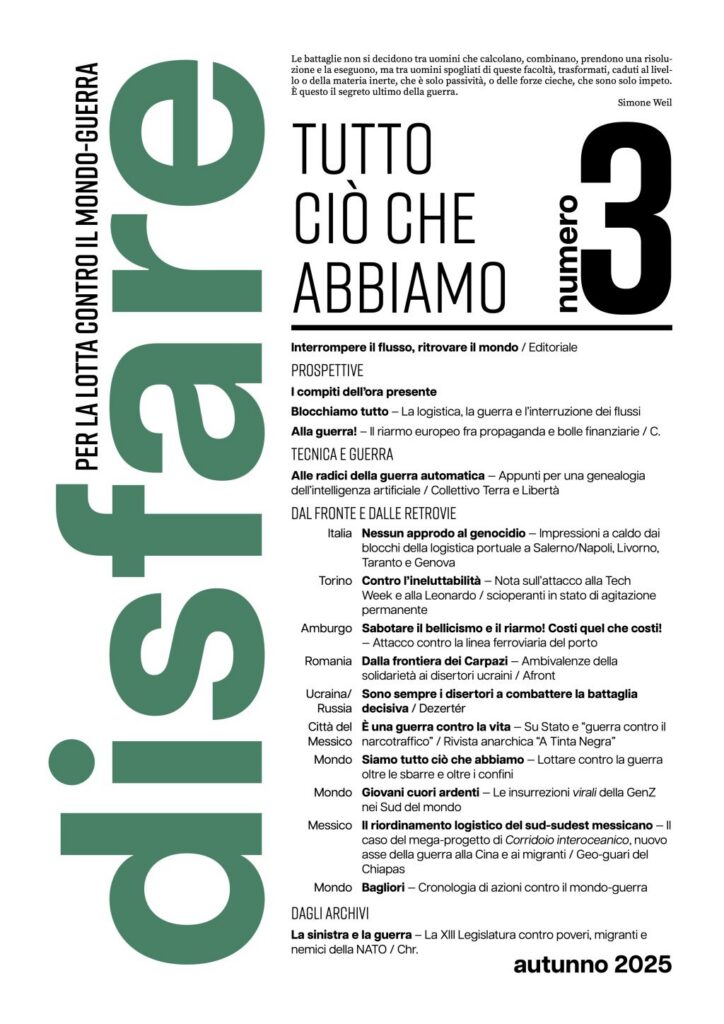
FOIE GRASS RESTAURANT SABOTAGED. – Pittsburgh, PA

Publié le 2025-12-26 10:29:34

11th December, Pittsburgh USA.

"Locks glued at restaurant serving foie gras in Pittsburgh.

Sabotage!"
Found On UnoffensiveAnimal

Autonomie anarco-communiste : discussions

Publié le 2025-12-26 10:39:33

Commençons 2026 par un petit cycle de discussion de derrière les fagots.


Lutte armée et lutte en armes : violence et révolution

Dans les mouvements de lutte, les insurrections et le processus révolutionnaire, la question de la violence est à la fois fondamentale et complexe. En effet, puisqu’il semble qu’elle soit une partie intégrante de l’affaire, dans les faits quand ça n’est pas en theorie, les questions sont multiples :
De quelles violence parle-t-on, et peut-elle, ou ne doit-elle surtout pas, avoir la même forme que le camp d’en face ?Qu’impliquent son surgissement, sa généralisation, sa normalisation, ou au contraire sa marginalisation ou sa spécialisation dans un mouvement ?
Quelle est sa place dans la lutte : en est-elle le coeur, la matrice et le moteur, ou bien une nécessité parmi d’autres, un simple fragment des diverses expressions du processus révolutionnaire.. voire un problème à contenir ?
Est-elle neutre, c’est-à-dire a dire n’est-elle qu’une expression , ou agit-elle à son tour sur celleux qui l’expriment ? Autrement dit, y a-t-il un lien entre le mode d’organisation de la violence et la nature de la lutte, ou son horizon politique - lutte révolutionnaire, lutte d’avant-garde, lutte de libération nationale... Violence d’un processus d’émancipation ou bien violence d’un camp... etc ?

Pour se poser toutes ces questions, on propose de se retrouver autour de divers documents liés à l’histoire de l’autonomie italienne des années 70 et de l’insurrection en Syrie des années 2010, au cours d’un cycle de 5 discussions. L’idée est chaque fois de lire/écouter ensemble les documents pendant les premières trente minutes - trois quarts d’heure, puis de débattre ensemble.

Les discussions sont ouvertes à toustes. C’est pas obligé d’avoir assisté à celles d’avant pour venir, vu que malgré le thème commun, on l’aborde par des docs différents à chaque fois ! Et le programme est indicatif : si t’as envie que y ait des séance autour de documents que tu trouves bien, c’est grave possible. à bientôt !

PROGRAMME
toutes les discussions ont lieu à l’impasse (1 bis impasse Lapujade)

Mardi 13/01 18h30
Premiere discussion, sans doc spécifique

Mardi 27/01 18h30
Discussion autour de la vidéo "Autonomie ouvrière : mouvement révolutionnaire en Italie #3" par la chaîne Rennes dtr

Mardi 10/02 18h30
Discussion autour de la brochure "otages du fusil : milantisme ou militarisme"

Mardi 24/02 18h30
Discussion autour du podcast "Guerre, révolution et contre-révolution au Rojava et en Syrie : mythes et réalités" (première partie)

Mardi 10/03 18h30
Discussion autour du podcast "Guerre, révolution et contre-révolution au Rojava et en Syrie : mythes et réalités" (deuxième partie)

New York (USA) : Compte rendu de la rafle de l’ICE déjouée le 29 novembre

Publié le 2025-12-26 16:57:08

never sleep / jeudi 11 décembre 2025

La rafle massive prévue par l’ICE [Immigration and Customs Enforcement, le service de police aux frontières et de douanes des États-Unis ; NdAtt.] le samedi 29 novembre sur Canal Street a été contrecarrée par des groupes d’intervention rapide / ICE watch et des gens ordinaires dans la rue. Voici un compte rendu.

Le contexte

Dans la semaine avant la rafle, des groupes communautaires d’intervention rapide / des patrouilles anti-ICE ont appris, d’une manière ou d’une autre, que l’ICE prévoyait une autre opération sur Canal Street, plus grande que la première, potentiellement en utilisant pour la réaliser des centaines d’agents fédéraux. Ces groupes d’intervention rapide, bien qu’ils existent, sous différentes formes, depuis les années 2010, ont adopté au cours des derniers mois une méthode d’organisation beaucoup plus efficace et structurée. La plupart de ces groupes ont récemment utilisé des méthodes d’organisation autonomes/décentralisées, largement organisées par secteur géographique. Même s’il existe des organisations formelles de « ICE watch », la plupart sont assez informelles et n’ont aucune présence publique ou sur les médias sociaux. À travers ces différents groupes, il y a eu un effort à l’échelle de la ville pour coordonner le partage des ressources (données sur les plaques d’immatriculation, etc.) et le partage des informations confirmées sur les rafles de l’ICE, pour une réponse rapide. Il est important de mentionner cela en ce qui concerne la rafle de samedi car, bien que les éventements ait été décrits par les médias comme une « manifestation » à laquelle les gens ont répondu suite à un appel sur les réseaux sociaux, ce n’est pas vraiment le cas, du moins de ce point de vue.

Le contexte plus large des rafles de l’ICE à New York est que, même si l’ICE y a été active, cela n’a pas eu le même aspect que dans de nombreuses autres grandes villes. Dans la plupart des cas, le DHS [Department of Homeland Security, le département fédéral de la Sécurité publique, duquel dépendent l’ICE et de nombreuses autres agences ; NdAtt.] et l’ICE ont fait des petites descentes et des arrestations dans les différents arrondissements, notamment de nombreuses interpellations dans et autour du complexe du Tribunal de l’immigration, à Manhattan. La dernière tentative de rafle massive, de type « inonder les rues », remonte à environ un mois et avait eu lieu aussi sur Canal Street, ciblant les vendeur.euses [ambulant.es] là-bas. Cela a été un succès pour eux, dans la mesure où l’ICE a pu effectuer plusieurs arrestations en vue d’une déportation et a aussi fait une grande opération de photos, une victoire de propagande pour le « nettoyage de la sale New York ». Cela dit, il y a eu une réponse de la communauté à cette rafle-là aussi et elle s’est terminée par de grands groupes de gens pourchassant les agents fédéraux jusqu’à chez eux, sur Federal Plaza. La réponse à cette rafle-là a été beaucoup plus spontanée et impulsive que celle à la plus récente.

Les éventements de samedi

Grâce à des groupes d’activistes qui été informé.es de la possible rafle, la Federal Plaza a probablement été surveillée, pour confirmer le déploiement de flics de l’ICE dans la ville pour l’organisation de l’opération. Le matin, beaucoup d’activistes communautaires se sont mis.ses à informer les vendeur.euses et d’autres personnes près de Canal Street qu’une grande action de l’ICE était imminente. C’était la raison principale de la présence des gens sur Canal Street, non pas une manifestation ou une dénonciation de ce qui allait se passer. Cela dit, une fois ce travail terminé, de nombreuses personnes ont commencé à se rassembler devant un garage appartenant au gouvernement, où il avait été découvert que l’ICE se préparait.

À ce moment-là, il n’y avait pas de présence du NYPD [la police de la ville de New York ; NdAtt.] directement autour du garage, mais il était clair qu’il y avait beaucoup de flics de la ville postés dans le secteur, qu’ils avaient été informés de la rafle et que l’ICE leur avait demandé de contrôler la foule. Au fil de la matinée, des gens de la rue ont aussi commencé à rejoindre la foule devant le garage et à un certain point un appel a été lancé sur les médias sociaux, ce qui a peut-être aussi amené des gens. À un moment donné, l’ICE a ouvert la porte du garage pour évaluer la situation et la foule a commencé à scander « ICE hors de New York ».

Peu après l’ouverture de la porte, des barricades légères, composées de poubelles, de cônes de signalisation et d’autres déchets ont commencé à apparaître dans l’allée derrière la foule. À ce point-là, le NYPD était sur place et, au cours de l’heure suivante, ils ont commencé à se mettre entre les agents fédéraux et la foule et à faire de la place pour que les agents fédéraux puissent potentiellement sortir. Alors que les affrontements entre le NYPD et la foule commençaient, dans la zone de la rue en amont du garage, une benne de chantier a commencé à être vidée dans la rue. De plus, il y avait d’autres poubelles, palettes, etc. qui se déplaçaient pour être le long de la possible route de sortie vers Canal Street.

Ce siège a duré plusieurs heures, avec les agents de l’ICE piégés à l’intérieur du garage de 10h jusqu’en début d’après-midi. Pendant ce temps, le NYPD a fait plusieurs interpellations, mais s’est principalement concentré sur l’installation de ses grillages antiémeute, pour diviser la foule en deux ou trois groupes et préparer la route pour le passage du convoi des fédéraux. Au fil du temps, il est devenu clair que si l’ICE tentait une rafle près de Lower Manhattan ou Chinatown, ces foules l’auraient suivi.

Quand les voitures ont enfin commencé à sortir du garage, plusieurs personnes courageuses ont sprinté pour sauter devant le convoi. Cela l’a ralenti suffisamment pour que d’autres personnes commencent à traîner des trucs dans la rue, pour entraver davantage la sortie du convoi. Le convoi a réussi à atteindre Canal Street et c’était extrêmement chaotique. Le SRG [l’antiémeute du NYPD ; NdAtt.] a fait de son mieux pour être à leurs côtés et autour d’eux, procéder à des arrestations et nettoyer la rue des déchets. Sur Canal Street, des sapins de Noël, des palettes, des poubelles, des panneaux publicitaires, des pots en terre cuite et d’autres objets ont été rapidement jetés, de loin, sur les véhicules.

Finalement, le convoi s’est divisé en deux parties, avec une moitié retournant à Federal Plaza et l’autre moitié (principalement les camionnettes blanches) se dirigeant vers le Holland Tunnel vers Jersey City. Après la fin de l’action, des groupes communautaires ont continué à surveiller Canal Street et Federal Plaza, au cas où les fédéraux auraient essayé de revenir. De plus, des patrouilles anti-ICE renforcées ont eu lieu pendant le reste de la journée et le lendemain, au cas où ils auraient essayé de faire une rafle dans un autre arrondissement. Le NYPD a fait une dizaine d’arrestations, tout au long de la journée, et a accusé deux de ces personnes de violences contre des policiers. Compte tenu des nombreuses choses qui se sont passées et de la quantité de personnes présentes, c’est un nombre d’arrestations relativement faible.

Cette action a semblé être une énorme victoire pour celles/ceux qui ont travaillé dur pour construire des infrastructures communautaires pour répondre à l’action imminente de l’ICE à New York. C’était vachement encourageant et vraiment cool à voir.

Fuck ICE et espérons que la prochaine fois qu’ils sortent leur tête, des gens leur remettent à nouveau une raclée. On est assez sûr.es que l’ICE a eu ses pneus crevés à Staten Island, récemment, c’est très cool.

[Les images sont tirées des médias grand public ; NdAtt.]

Incendie d'un rouleau compresseur NGE

Publié le 2025-12-27 09:47:06

NGE n’a pas fini de voir ses engins de mort finir en cendre à la lumière du ciel nocturne...


Il y a quelques nuits, sous un ciel d’étoiles filantes, un rouleau compresseur appartenant à Guintoli, filiale du groupe NGE, a été incendié sur un chantier près de Toulouse.

NGE et ses filiales sont engagées sur les travaux de l’A69 Toulouse-Castres, de la LGV Bordeaux-Toulouse, de la troisième ligne de métro à Toulouse, du tunnel TAV Lyon-Turin et sur une multitude de chantiers à travers le pays.

Ici ou ailleurs, NGE ne sera jamais tranquille.

Bisous.